
Commercial Ice Cream Machines Australia
Carpigiani Ice Cream Machines
Commercial ice cream machines for every format: batch freezers for scooped ice cream and gelato, soft serve machines for cones and sundaes, combined machines and pasteurisers, for ice cream shops, gelaterias, cafés and production kitchens, with service and genuine parts across Australia.

Ice cream process: prepare the mix > pasteurise > age > batch freeze > blast freeze > serve
Every step of ice cream production has a Carpigiani machine built for it. Our team helps you size the right line for your venue and your volumes.
or call 1800 625 677
Which commercial ice cream machine do you need?
Soft serve machines
Cones, sundaes, frozen yoghurt and açaí dispensed on demand. Countertop and floor-standing models for cafés, QSR and dessert bars.
Batch freezers
Scooped ice cream and gelato made in cycles for the display cabinet. Eight Carpigiani models on this page.
Combined machines
Pasteurise, age and freeze in one body, for kitchens that make their own base from fresh ingredients.
Batch freezers
Labo and Labotronic machines that freeze the mix into ice cream and gelato, from countertop units to high-output floor models.


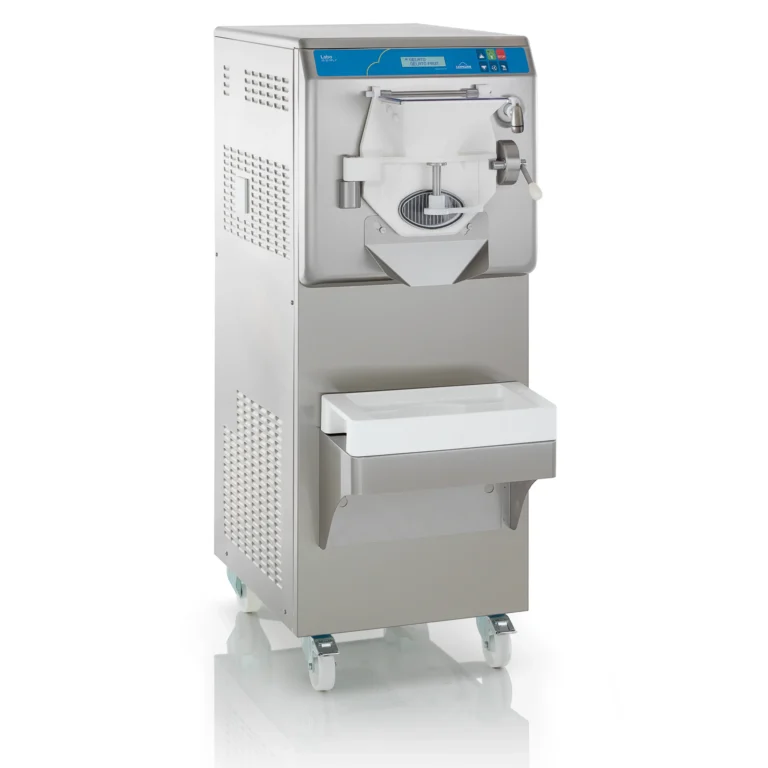

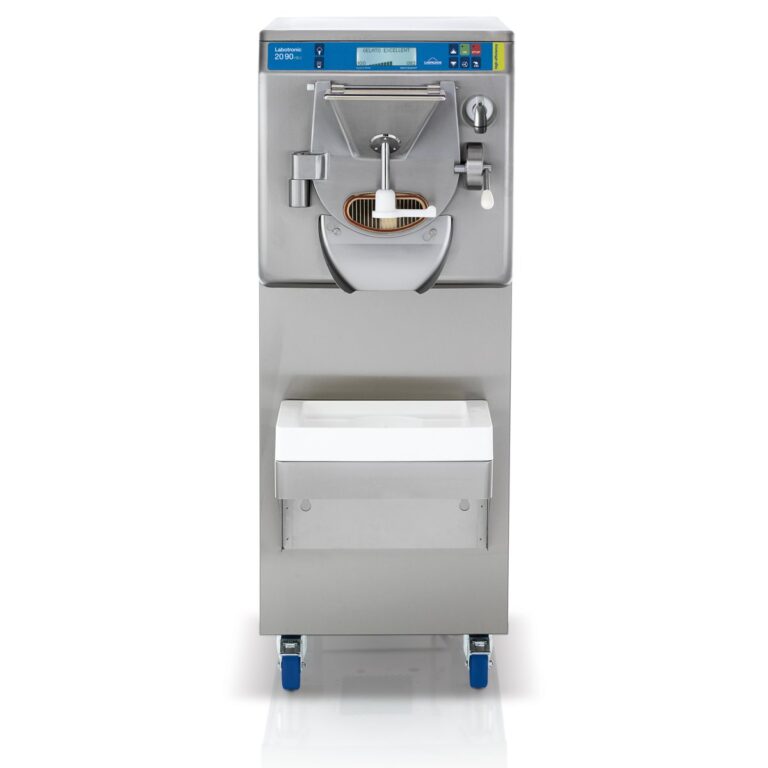
Batch freezers compared
Quantity per batch, production, power supply and size for every batch freezer on this page.
| Model | Output per hour | Power supply | Rated power | Dimensions | Net weight |
|---|---|---|---|---|---|
| Labo 8-12 XPL P | min 8 kg, max 12 kg | 240 V / 50 Hz / 1 Ph | 2.2 kW | 36 × 55 × 74 cm | 90 kg |
| Labo 14 20 XPL P | min. 14 kg; max. 20 kg | 240 V / 50 Hz / 1 Ph | – | 45.5 × 58 × 76.5 cm | 150 kg |
| Labo 20 30 XPL P | 20/30 kg; 28/40 L | 400 V / 50 Hz / 3 Ph | 4 kW | 52 × 65 × 140 cm | 230 kg |
| Labo 30 45 XPL P | 30/45 kg; 42/60 L | 400 V / 50 Hz / 3 Ph | 5.2 (EU Version) kW | 52 × 65 × 140 cm | 270 kg |
| Labo 40 60 XPL P | 40/60 kg; 56/84 L | 400 V / 50 Hz / 3 Ph | 6 (EU Version) kW | 52 × 65 × 140 cm | 320 kg |
| Labo 50 90 XPL P | 50/90 kg; 70/126 L | 400 V / 50 Hz / 3 Ph | 7 (EU Version) kW | 52 × 65 × 140 cm | 330 kg |
| Labo 80 120 XP | 120 kg | 400 V / 50 Hz / 3 Ph | 10 kW | 66 × 114 × 140 cm | 480 kg |
| Labotronic HE-H | – | 400 V / 50 Hz / 3 Ph | 10/45: 6.4 kW; 15/60: 7.6 kW; 20/90: 9 kW; 25/110: 11 kW | 15/60: 52 × 65 × 140 cm; 20/90: 52 × 65 × 140 cm; 25/110: 52 × 85 × 140 cm | 15/60: 320 kg; 20/90: 345 kg; 25/110: 420 kg |
Combined machines
Ready, ReadyChef and Lab O Chef heat, pasteurise and freeze in one machine, so a small kitchen can make ice cream from scratch.
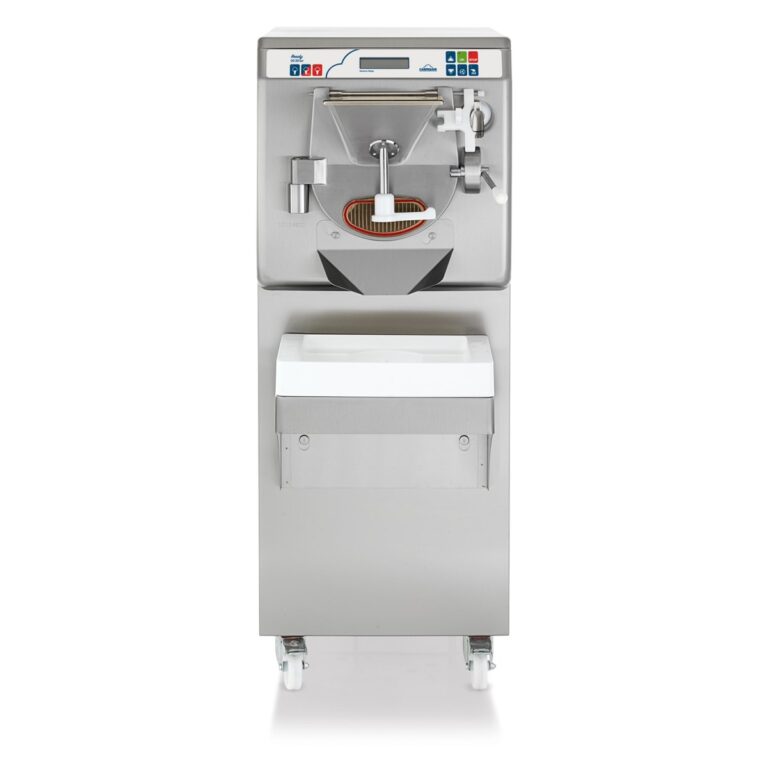
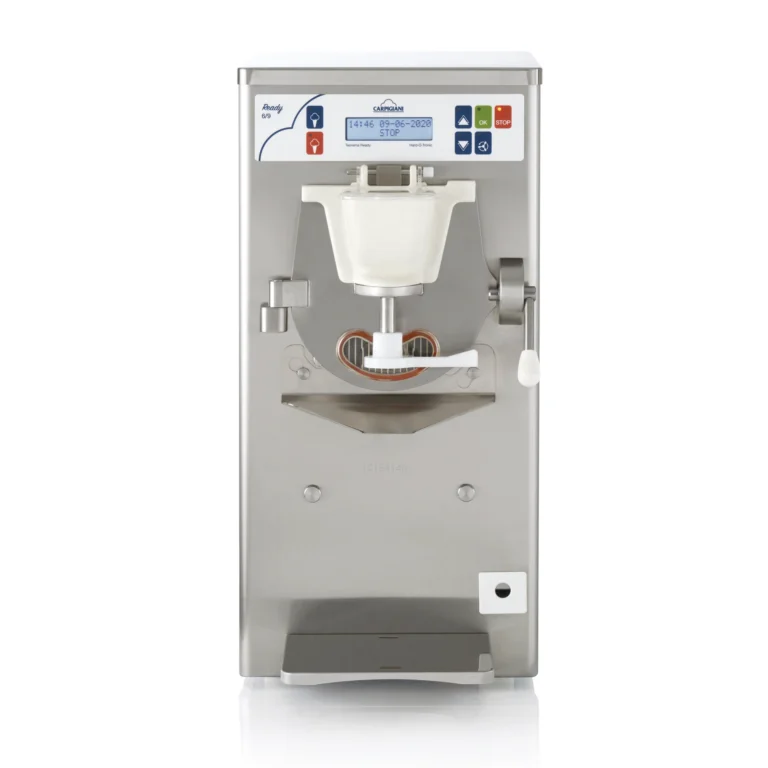

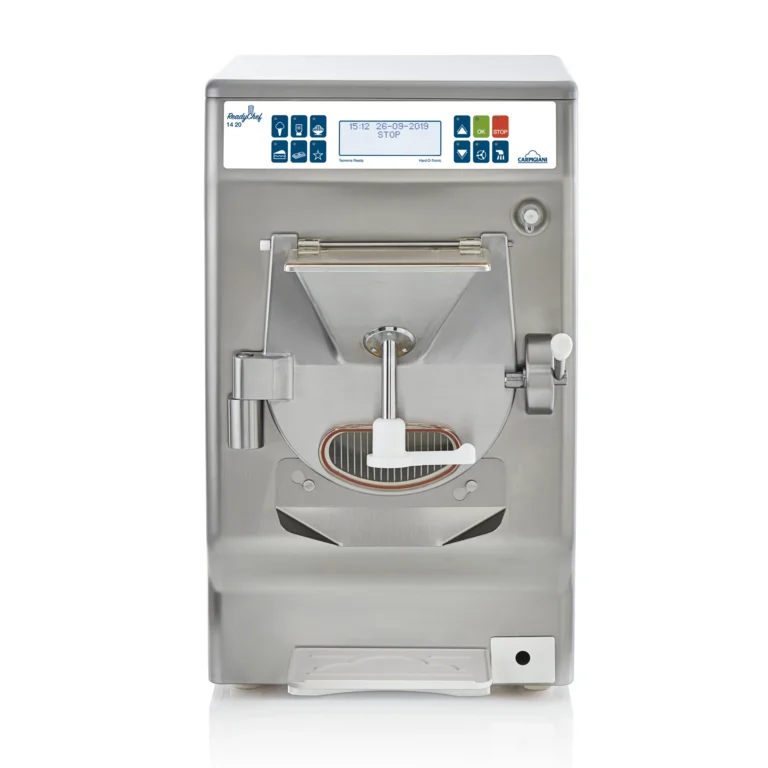
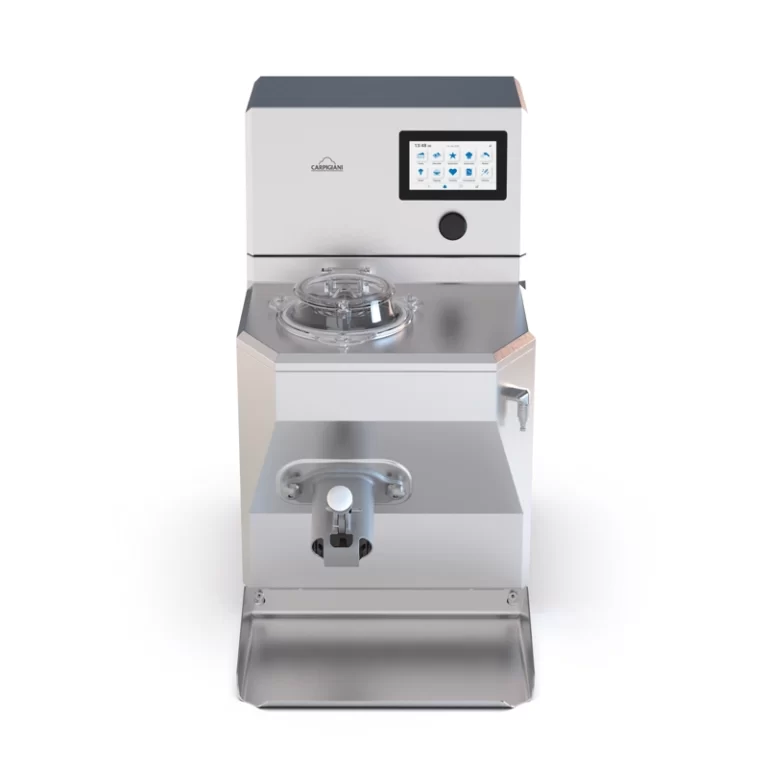
Combined machines compared
The combined pasteuriser and batch freezer models side by side.
| Model | Quantity per batch | Output per hour | Power supply | Rated power | Dimensions | Net weight |
|---|---|---|---|---|---|---|
| Ready | 20/30: 3–5 kg; 30/45: 3.5–7.5 kg | 20/30: 20–30 kg (28–40 L); 30/45: 30–45 kg (42–60 L) | 400 V / 50 Hz / 3 Ph | 20/30: 4 kW; 30/45: 5.2 kW | 52 × 65 × 140 cm | 20/30: 250 kg; 30/45: 290 kg |
| Ready 8-12 | 1.5–2.5 kg | min. 8 kg - max. 12 kg | 240 V / 50 Hz / 1 Ph | 2.2 kW | 52 × 65 × 140 cm | 250 kg |
| Ready 14 20 | 2–4 kg | 14 kg min, 20 kg max | 240 V / 50 Hz / 1 Ph | 3 kW | 52 × 65 × 140 cm | 250 kg |
| ReadyChef | – | – | 240 V / 50 Hz / 1 Ph | 14/20: 3 kW; 8/12: 2.2 kW W | 52 × 65 × 140 cm | 250 kg |
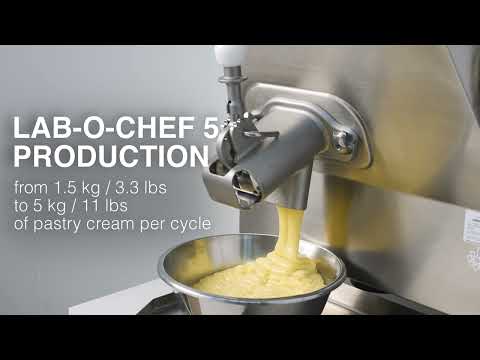
| Lab O Chef 5 | – | – | 400 V / 50 Hz / 3 Ph | 3 kW | 50 cm x 86 cm x 86 cm cm | 156 kg |
Pasteurisers and ageing vats
Pastomaster and Pasto pasteurisers and the AGE ageing vat for safe, consistent mix preparation.
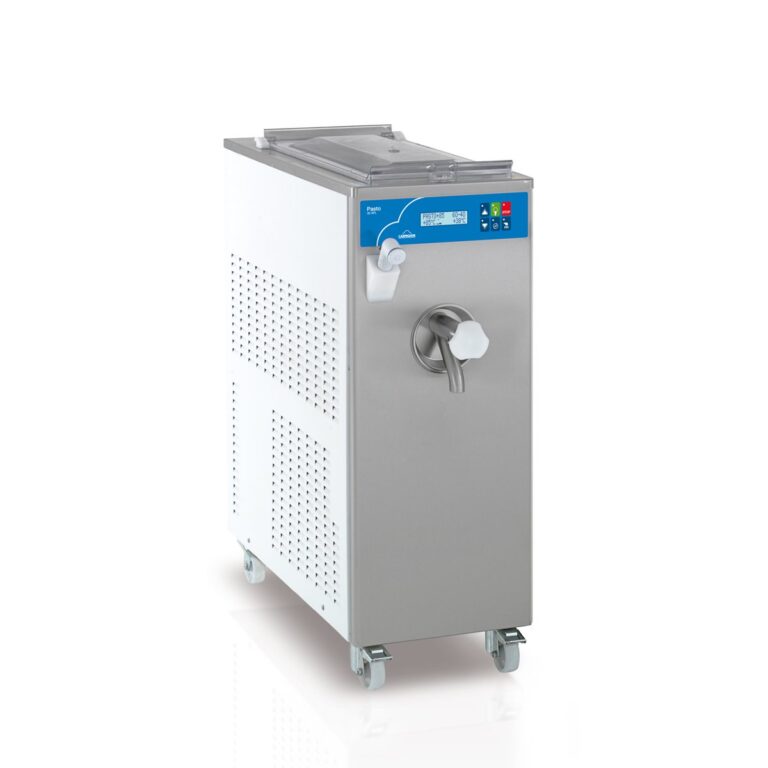
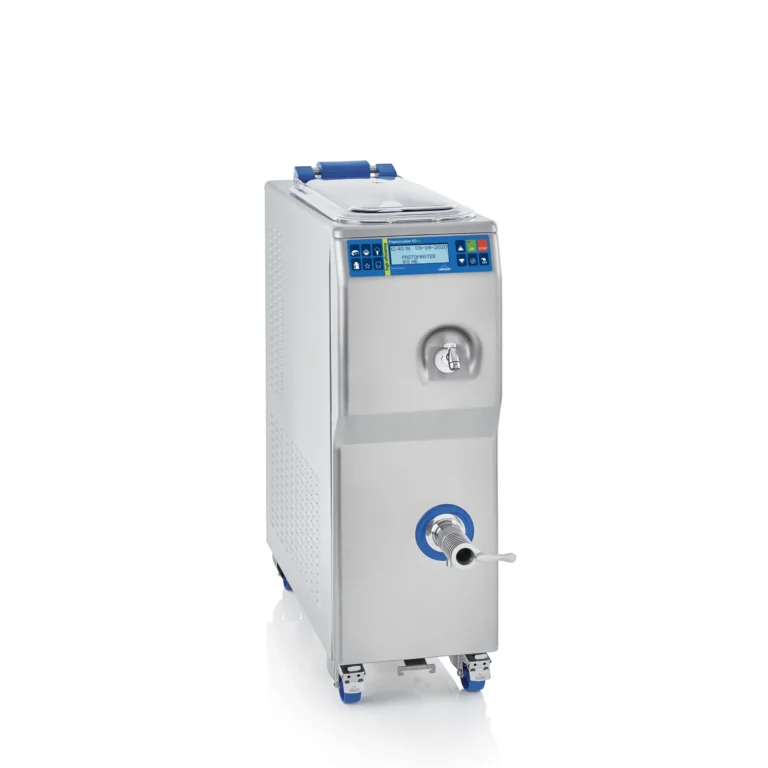


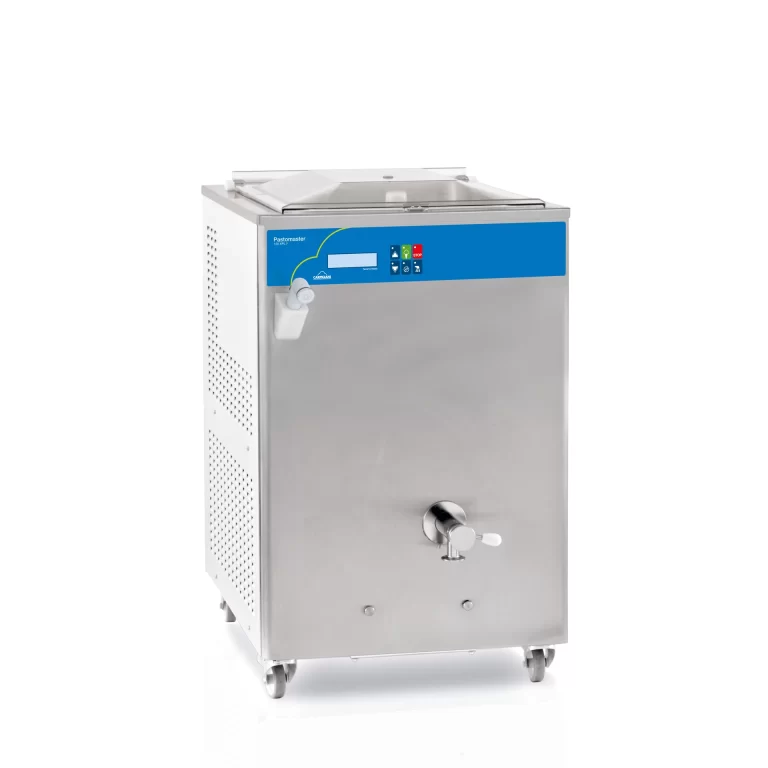
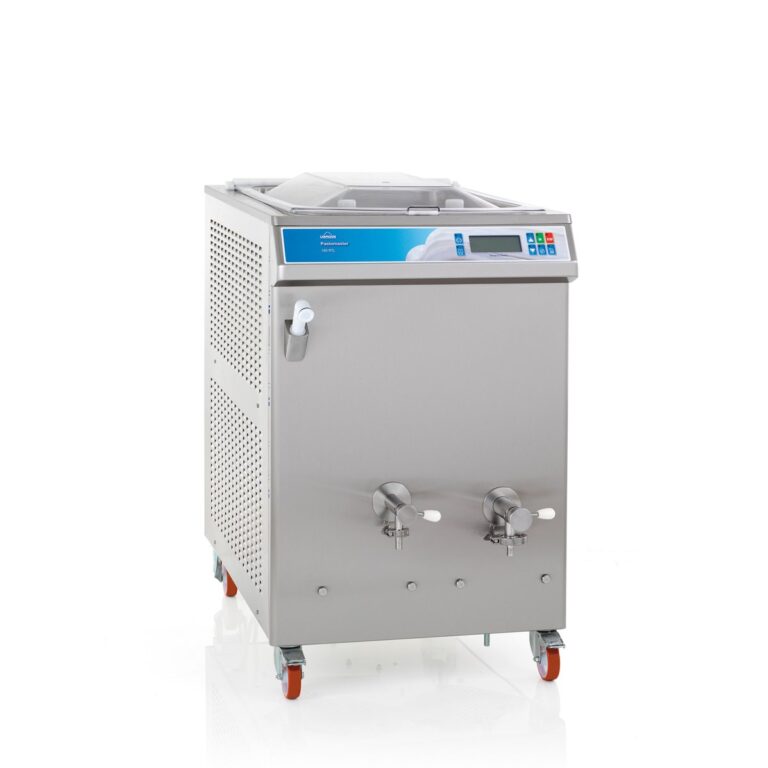

Pasteurisers and ageing vats compared
Cycle, tank, power supply and size for every pasteuriser on this page.
| Model | Tank capacity | Power supply | Rated power | Fuse | Dimensions | Net weight |
|---|---|---|---|---|---|---|
| Pasto 30 XPL | – | 400 V / 50 Hz / 3 Ph | 3.4 kW | 16 A | 39 × 85 × 103 cm | 140 kg |
| Pastomaster 60 HE | 15–60 L | 400 V / 50 Hz / 3 Ph | 60 HE: 7 kW; 60 HE P: 11.2 kW | 60 HE: 16 A; 60 HE P: 20 A | 35 × 90 × 105 cm | 165 kg |
| Pastomaster 60 HE P | 15–60 L | 400 V / 50 Hz / 3 Ph | 11.2 kW | 20 A | 35 × 90 × 105 cm | 165 kg |
| Pastomaster 60 XPL P | – | 400 V / 50 Hz / 3 Ph | 7 kW | 16 A | 35 × 86 × 103 cm | 162 kg |
| Pastomaster 120 HE | 30–120 L | 400 V / 50 Hz / 3 Ph | 11.2 kW | 20 A | 65 × 90 × 105 cm | 269 kg |
| Pastomaster 120 XPL P | – | 400 V / 50 Hz / 3 Ph | 11.2 kW | 20 A | 65 × 86 × 103 cm | 269 kg |
| Pastomaster 180 RTL | 30–180 L | 400 V / 50 Hz / 3 Ph | 17.5 kW | 28 A | 75 × 106 × 119 cm | 345 kg |
| Pastomaster RTL | 60 RTL: 15–60 L; 120 RTL: 30–120 L | – | – | – | – | – |
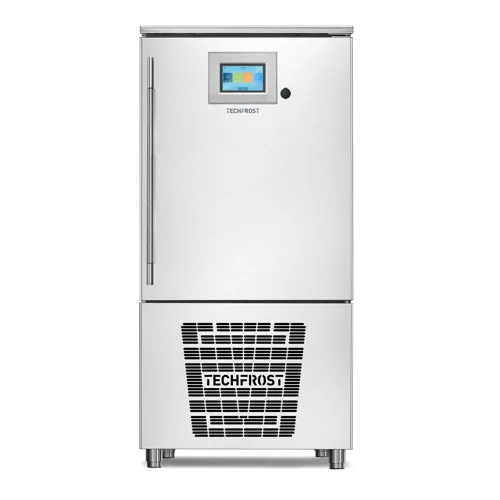
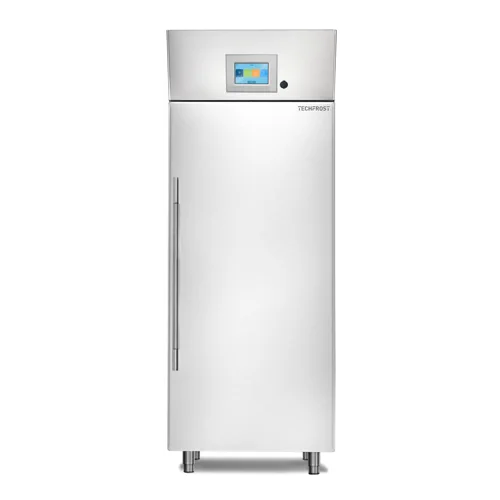
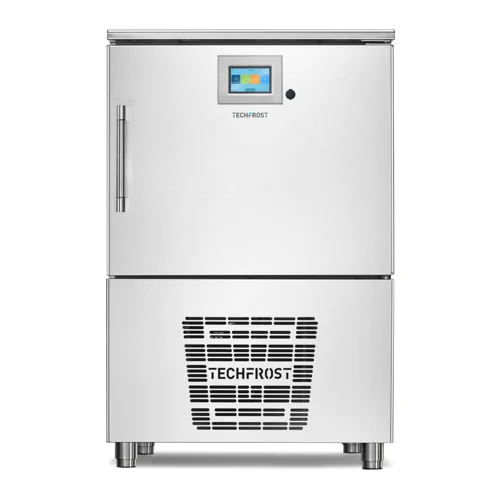
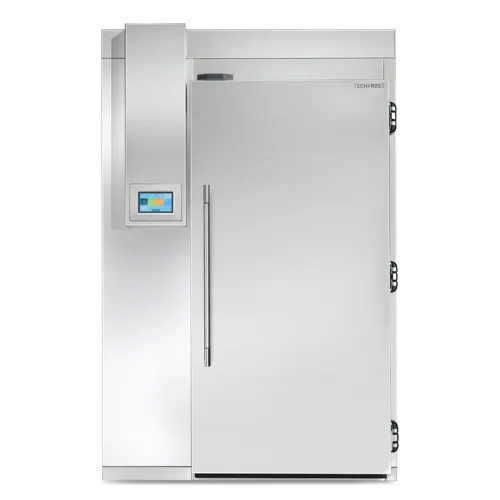
Techfrost blast freezers and shock chillers
Techfrost blast freezers and shock chillers harden ice cream, gelato and semifreddo fast, and chill pastry safely.


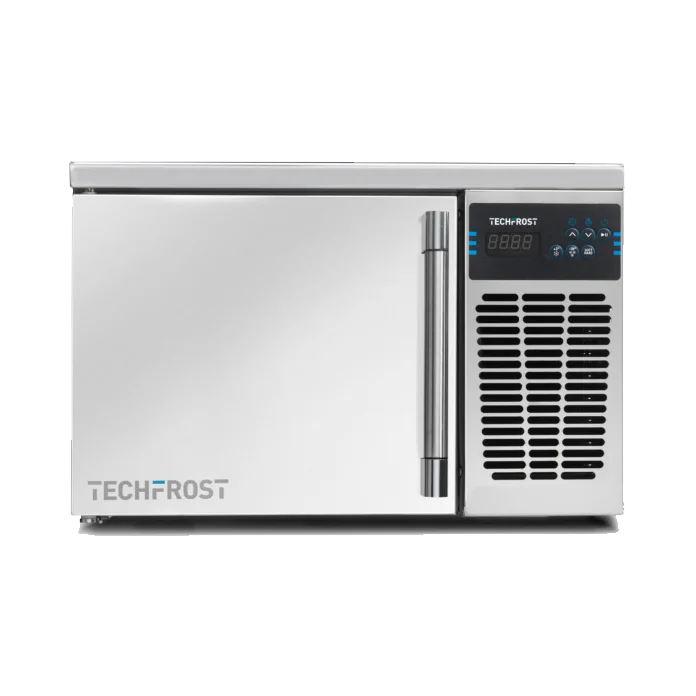
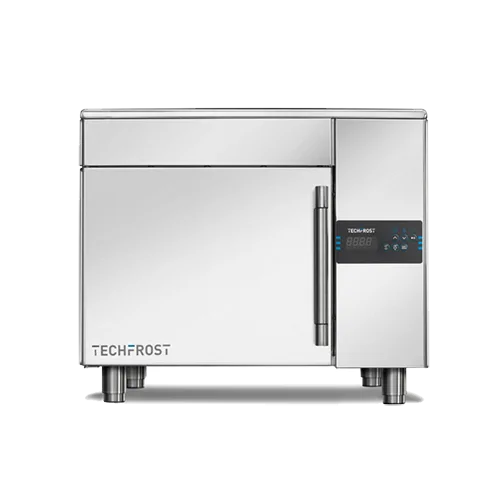




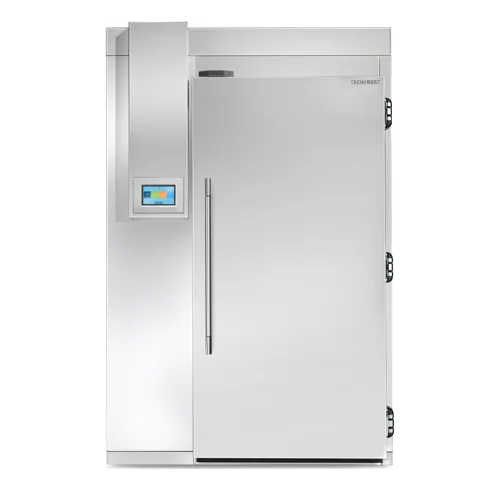

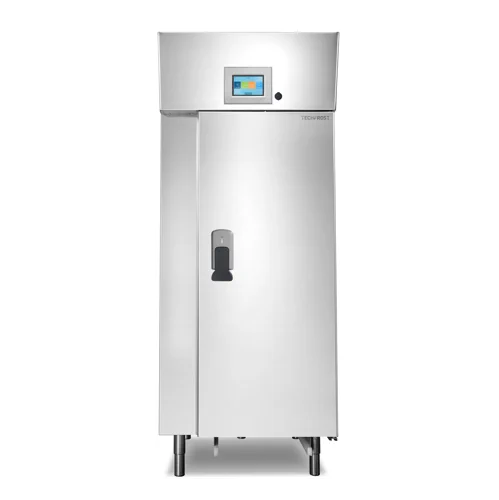
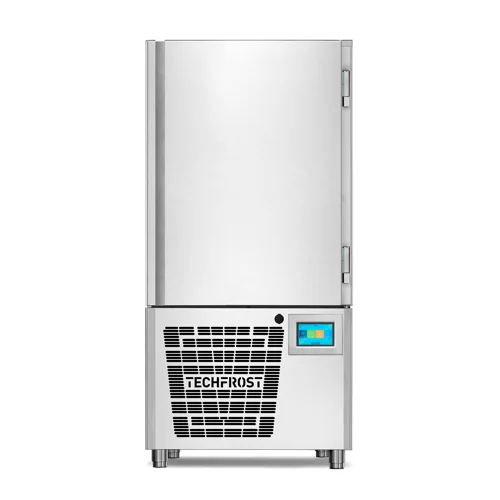
Blast freezers compared
Tray capacity, blast chilling and blast freezing loads, power supply and refrigerant for every Techfrost model.
| Model | Capacity | Blast chilling | Blast freezing | Power supply | Refrigerant |
|---|---|---|---|---|---|
| Techfrost E10 TRAYS Blast Freezer | 10 trays GN 1/1 - EN 600 × 400 | 90 °C +3 °C in 90 min = 28 kg | 90 °C -18 °C in 240 min = 18 kg | 400 V / 3 Ph / 50 Hz | R452 A (GWP 2141) |
| Techfrost E15 TRAYS Blast Freezer | 15 trays GN 1/1 - EN 600 × 400 | 90 °C +3 °C in 90 min = 45 kg | 90 °C -18 °C in 240 min = 27 kg | 400 V / 3 Ph / 50 Hz | R452 A (GWP 2141) |
| Techfrost E20 TRAYS Blast Freezer | 20 trays GN 1/1 - EN 600 × 400 | 90 °C +3 °C in 90 min = 75 kg | 90 °C -18 °C in 240 min = 45 kg | 400 V / 3 Ph / 50 Hz | R452 A (GWP 2141) |
| Techfrost E3 Blast Freezer | 3 trays GN 1/1 | 90 °C +3 °C in 90 min = 7 kg | 90 °C -18 °C in 240 min = 5,0 kg | 230 V / 1 Ph / 50 Hz | R452 A (GWP 2141) |
| Techfrost E5 Blast Freezer | 5 trays GN 1/1 - EN 600 × 400 | 90 °C +3 °C in 90 min = 20 kg | 90 °C -18 °C in 240 min = 14 kg | 230 V / 1 Ph / 50 Hz | R452 A (GWP 2141) |
| Techfrost E8 Blast Freezer | – | – | – | – | – |
| Techfrost JOF 923 Blast Freezer | 3 trays GN 2/3 | 90 °C +3 °C in 90 min = 7 kg | 90 °C -18 °C in 240 min = 4,9 kg | 230 V / 1 Ph / 50 Hz | R452 A (GWP 2141) |
| Techfrost JOF ONE 3 Blast Freezer | 3 trays GN 1/1 - EN 600 × 400 | 90 °C +3 °C in 90 min = 12 kg | 90 °C -18 °C in 240 min = 8 kg | 230 V / 1 Ph / 50 Hz | R452 A (GWP 2141) |
| Techfrost M10 Blast Freezer | 10 trays GN 1/1 - EN 600 × 400 | 90 °C +3 °C in 90 min = 30 kg | 90 °C -18 °C in 240 min = 20 kg | 400 V / 3 Ph / 50 Hz | R452 A (GWP 2141) |
| Techfrost M15 Blast Freezer | 15 trays GN 1/1 - EN 600 × 400 | 90 °C +3 °C in 90 min = 50 kg | 90 °C -18 °C in 240 min = 30 kg | 400 V / 3 Ph / 50 Hz | R452 A (GWP 2141) |
| Techfrost M20 Blast Freezer | 20 trays GN 1/1 - EN 600 × 400 | 90 °C +3 °C in 90 min = 75 kg | 90 °C -18 °C in 240 min = 45 kg | 400 V / 3 Ph / 50 Hz | R452 A (GWP 2141) |
| Techfrost M5 Blast Freezer | 5 trays GN 1/1 - EN 600 × 400 | 90 °C +3 °C in 90 min = 22 kg | 90 °C -18 °C in 240 min = 15 kg | 230 V / 1 Ph / 50 Hz | R452 A (GWP 2141) |
| Techfrost M8 Blast Freezer | 8 trays GN 1/1 - EN 600 × 400 | 90 °C +3 °C in 90 min = 25 kg | 90 °C -18 °C in 240 min = 16 kg | 230 V / 1 Ph / 50 Hz | R452 A (GWP 2141) |
| Techfrost MB40 Blast Freezer | 1 trolley 20 trays GN 1/1 - GN 2/1 - EN 600 × 400 - EN 600 × 800 | 90 °C +3 °C in 90 min = 100 kg | 90 °C -18 °C in 240 min = 70 kg | 400 V / 3 Ph / 50 Hz | R452 A (GWP 2141) |
| Techfrost MBF230 BIG Blast Freezer | 1 trolley 20 trays GN 1/1 - EN 600 × 400 | 90 °C +3 °C in 240 min = 75 kg | 90 °C -18 °C in 240 min = 45 kg | 400 V / 3 Ph / 50 Hz | R452 A (GWP 2141) |
| Techfrost MBF420 Blast Freezer | 1 trolley 20 trays GN 2/1 - EN 600 × 800 | 90 °C +3 °C in 90 min = 200 kg | 90 °C -18 °C in 240 min = 160 kg | 400 V / 3 Ph / 50 Hz | R452 A (GWP 2141) |
| Techfrost MBF520 Blast Freezer | 2 trolleys 20 trays GN 2/1 - EN 600 × 800 | 90 °C +3 °C in 90 min = 360 kg | 90 °C -18 °C in 240 min = 235 kg | 400 V / 3 Ph / 50 Hz | R452 A (GWP 2141) |
| Techfrost MBF620 Blast Freezer | 3 trolleys 20 trays GN 2/1 - EN 600 × 800 | 90 °C +3 °C in 90 min = 550 kg | 90 °C -18 °C in 240 min = 330 kg | 400 V / 3 Ph / 50 Hz | R452 A (GWP 2141) |
| Techfrost MBF720 Blast Freezer | 4 trolleys 20 trays GN 2/1 - EN 600 × 800 | 90 °C +3 °C in 90 min = 700 kg | 90 °C -18 °C in 240 min = 480 kg | 400 V / 3 Ph / 50 Hz | R452 A (GWP 2141) |
| Techfrost MBF820 Blast Freezer | 5 trolleys 20 trays GN 2/1 - EN 600 × 800 | 90 °C +3 °C in 90 min = 860 kg | 90 °C -18 °C in 240 min = 580 kg | 400 V / 3 Ph / 50 Hz | R452 A (GWP 2141) |
| Techfrost MBF920 Blast Freezer | 6 trolleys 20 trays GN 2/1 - EN 600 × 800 | 90 °C +3 °C in 90 min = 1050 kg | 90 °C -18 °C in 240 min = 720 kg | 400 V / 3 Ph / 50 Hz | R452 A (GWP 2141) |
| Techfrost MCR20 Blast Freezer | 1 trolley 20 trays GN 1/1 | 90 °C +3 °C in 90 min = 75 kg | 90 °C -18 °C in 240 min = 45 kg | 400 V / 3 Ph / 50 Hz | R452 A (GWP 2141) |
| Techfrost MP12 Blast Freezer | 12 trays GN 2/1 | 90 °C +3 °C in 90 min = 70 kg | 90 °C -18 °C in 240 min = 40 kg | 400 V / 3 Ph / 50 Hz | R452 A (GWP 2141) |
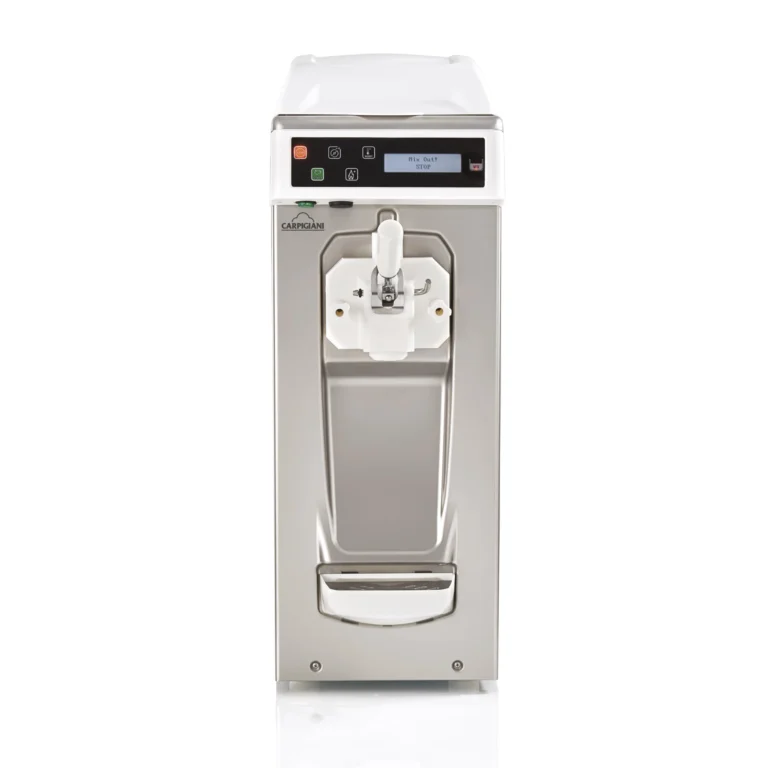
Countertop soft serve
A compact single-flavour machine for soft serve and express gelato. See the full range of Carpigiani soft serve machines.
Machine packages
Complete Carpigiani machine sets for starting or expanding production.


Commercial ice cream machines for factory volumes
Beyond batch freezers, we supply full ice cream production lines for manufacturers: mix preparation, continuous freezing and filling. Tell us your volumes and products and we will specify the line.
Mix preparation
Mixing tanks and mix preparation machines that weigh, blend and heat the base before freezing.
Continuous freezers
Continuous freezers for factory volumes, up to 1,500 litres of ice cream per hour.
Filling machines
Rotary and linear fillers, Technosandwich for ice cream sandwiches, the Filler Desk and the Variant 1000.
Choosing the right commercial ice cream machine is one of the highest-return decisions a hospitality operator makes. The machine on your floor sets your texture, your speed of service, your menu range and — when summer queues stretch out the door — whether you sell every cone you can make or watch customers walk. Majors Group is the Australian distributor for Carpigiani, the Italian brand widely regarded as the world benchmark in gelato, soft serve and frozen dessert equipment, and we supply, finance, install and service these machines across Australia.
This guide is built for commercial buyers: cafes, gelaterias, QSR and dessert chains, restaurants, event caterers and frozen-yoghurt shops weighing up an ice cream machine commercial purchase. We cover how to choose between machine types, how to size output to your venue, the power, plumbing and footprint factors that catch operators out, and the finance and after-sales support that protect your investment. Wherever a model suits your brief, you can request a quote — pricing is POA so you only ever pay for the configuration your venue actually needs.
If you already know whether you want soft serve on tap, dense scooping gelato from a batch freezer ice cream setup, or a versatile combined machine, skip ahead to the machine-types and capacity sections. If you are still scoping the project, start at the top — by the end you will know exactly what to specify and what to ask us for.
On this page
- Who this guide is for: matching the machine to your business
- How to choose a commercial ice cream machine: the eight factors that matter
- Types of commercial ice cream machines explained
- Capacity and output sizing by venue type
- Power, plumbing and footprint: the site factors that derail installs
- Why Carpigiani: the brand that defines the category
- Finance options: get the machine working sooner
- Service, spare parts and support across Australia
- Ready to specify your machine? Request a quote
- Technology other brands don't offer
- Frequently Asked Questions
Who this guide is for: matching the machine to your business
There is no single "best" commercial ice cream maker — only the best machine for your venue type, your volume and your menu. Before comparing models, get clear on your buyer intent. Operators generally fall into one of these groups, and each points to a different machine class:
- ✓Cafes and restaurants adding a dessert line or a signature soft serve — typically want a compact, easy-to-clean machine that one staff member can run between coffees, without dedicating a barista to it.
- ✓Gelaterias and artisan dessert bars — want a batch freezer (and often a pasteuriser) to produce dense, display-case gelato in many flavours, controlling overrun and recipe quality in-house.
- ✓QSR and dessert chains — want high-throughput soft serve that delivers a consistent swirl across sites and shifts, with minimal training and predictable maintenance.
- ✓Frozen-yoghurt shops — want multi-flavour soft serve and froyo machines with twist options to maximise menu variety from a small footprint.
- ✓Event and mobile caterers — want robust, fast-recovery machines (and catering-specific units) that handle long peak runs at festivals, functions and pop-ups.
Pinning down which group you are in immediately rules out half the catalogue. From there, the decision is mostly about type and capacity — which the next two sections walk through in detail.
How to choose a commercial ice cream machine: the eight factors that matter
A structured shortlist saves money and avoids the classic mistakes — buying too small for peak demand, or paying for output a venue will never use. Work through these eight factors in order:
1. Product and texture
Decide what you are actually selling. Soft serve (light, airy, served at around -4 to -6°C straight from the machine), traditional hard ice cream and gelato (dense, lower overrun, scooped from a display freezer), sorbet, custard and frozen yoghurt each suit different machine classes. Your product choice is the single biggest driver of machine type.
2. Overrun: the texture and margin lever
Overrun is the volume of air whipped into the mix. Soft serve typically runs 40–60% overrun, giving a lighter product and more serves per litre of mix; artisan gelato from a batch freezer usually runs 20–35%, giving a denser, more intensely flavoured scoop. More overrun stretches margin per litre; lower overrun signals premium quality. Carpigiani machines let you dial this in precisely and repeat it shift after shift.
3. Peak output, not average
Size for your busiest hour, not your daily average. A machine that comfortably meets your Saturday-afternoon or post-dinner peak will coast the rest of the week; one sized to the average will fail you exactly when revenue is highest. See the capacity-sizing section below for output figures by venue type.
4. Continuous vs batch service
Soft serve machines dispense on demand and recover quickly between serves. Batch freezers produce a defined quantity, which you extract and store for display-case service. High-frequency, single-product venues lean continuous; multi-flavour artisan venues lean batch. Combined and "ready" machines blur the line for operators who want both.
5. Power and cooling (covered in detail below)
Confirm whether your site has single-phase or three-phase power, and whether an air-cooled or water-cooled machine suits your kitchen environment. Getting this wrong delays installation and can mean expensive electrical work.
6. Footprint and workflow
Measure not just the machine's dimensions but the clearance it needs for ventilation and the bench or floor space around it for service flow. Countertop units suit space-tight cafes; freestanding units suit dedicated dessert stations.
7. Cleaning, hygiene and compliance
Frozen dairy is a food-safety-critical product. Machines with heat-treatment/pasteurising cycles extend the interval between full strip-downs; batch freezers generally need daily manual cleaning. Factor staff time and food-safety compliance into the running cost, not just the purchase price.
8. Total cost of ownership and support
Purchase price is one line. Energy use, mix yield, cleaning labour, spare-parts availability, service response time and resale value all feed into the real cost over five to seven years. A well-supported premium machine frequently beats a cheaper unit on total cost — which is why brand and after-sales support (covered later) belong in the buying decision, not as an afterthought.
Types of commercial ice cream machines explained
Most confusion in this category comes from blurry terminology. Here is how the main machine types differ and which venues each suits.
Soft serve machines
Soft serve machines freeze and aerate the mix continuously and dispense it on demand through a spout, producing the classic swirl. They are fast, simple to run and ideal for high-traffic, single-product or twist-product service. Most offer one, two or three flavours (two flavours plus a twist is the popular configuration). Countertop and freestanding versions are available. Best for QSR, cafes, froyo shops, cinemas and events. Carpigiani's 191/193 countertop and XVL freestanding ranges sit here.
Batch freezers (for gelato and hard ice cream)
Batch freezer ice cream production is the artisan route. A batch freezer churns a measured quantity of mix with low air incorporation, producing dense, intensely flavoured gelato or hard ice cream that you extract, pan and display. Because you make one flavour at a time, you get tight quality control and the ability to run a rotating, multi-flavour cabinet. Best for gelaterias, premium dessert bars and restaurants selling a signature scoop. Carpigiani's batch freezers and combined machines cover this category.
Combined and "ready" machines
Combined machines bring pasteurising/heat treatment and freezing into one body, letting you cook the mix and freeze it without transferring between units. Carpigiani's heat-and-freeze "Ready" concept lets a venue make fresh gelato from liquid mix in a single machine, simplifying workflow and reducing the equipment count for operators who are short on space but want artisan quality and food-safety control.
Pasteurisers
A pasteuriser heat-treats your mix to a safe temperature and holds it, then chills it ready for the batch freezer. Serious gelaterias making mix from scratch use a pasteuriser to guarantee food safety, extend mix shelf life and unlock full recipe freedom. Pair it with a batch freezer for a complete artisan production line.
Frozen yoghurt machines
Froyo machines are soft serve machines optimised for yoghurt-based and tart mixes, usually in multi-flavour/twist configurations to drive the self-serve, pay-by-weight model. Best for dedicated froyo shops and health-focused dessert concepts.
Catering and event machines
Catering-specific machines are built for portability and fast recovery under sustained peak load — the festival stall, the function, the pop-up. Robust construction and quick changeovers matter more than menu breadth here.
Soft serve vs batch freezer: quick comparison
The two most-considered classes side by side:
- ✓Service model — Soft serve: dispense on demand. Batch freezer: produce, extract, display.
- ✓Texture and overrun — Soft serve: light, 40–60% overrun. Batch freezer: dense, 20–35% overrun.
- ✓Menu — Soft serve: 1–3 flavours plus twist. Batch freezer: unlimited rotating flavours from one machine.
- ✓Speed — Soft serve: fastest per serve. Batch freezer: slower (batch cycle) but high display-case volume.
- ✓Cleaning — Soft serve: heat-treat models reduce strip-down frequency. Batch freezer: typically daily manual clean.
- ✓Best fit — Soft serve: QSR, cafes, events, froyo. Batch freezer: gelaterias, premium dessert bars.
Capacity and output sizing by venue type
This is where most buyer guides go quiet — competitors describe machines as "compact" or "high-capacity" without numbers. Here is practical sizing guidance so you can specify with confidence. Treat these as planning ranges; we will confirm exact output for any model against your peak-demand brief.
Soft serve: think serves per hour
- ✓Low-volume cafe or restaurant dessert line — a countertop single or twin-flavour machine handling roughly 50–150 serves per hour at peak is usually ample. Carpigiani 191/193 countertop range.
- ✓Busy cafe, cinema or mid-volume QSR — a freestanding twin-flavour-plus-twist machine in the ~150–300 serves-per-hour band keeps queues moving. Carpigiani XVL freestanding range.
- ✓High-volume QSR, dessert chain or large froyo store — a high-output freestanding unit (or multiple machines) for 300+ serves per hour at peak, with fast mix recovery and pump-fed consistency.
Batch freezer / gelato: think litres per hour and flavours per day
- ✓Small gelateria or cafe-with-cabinet — a compact batch freezer producing a few litres per cycle, enough to keep an 8–12 pan cabinet stocked with daily fresh production.
- ✓Established gelateria — a higher-output batch freezer (often paired with a pasteuriser) to refill a 20+ pan cabinet and keep best-sellers in constant rotation through peak season.
- ✓Production kitchen / multi-site supply — large-format batch freezers and combined machines built for sustained back-of-house production volumes.
Events and catering
For festivals and functions, size for a long, unbroken peak rather than a short rush — fast freezing recovery and reliability under continuous load matter more than headline capacity. A catering-class machine, or two mid-size machines for redundancy, usually beats one large unit if downtime would be costly.
A useful rule of thumb: estimate your busiest hour's transactions, multiply by your average serves per transaction, then add 20–30% headroom for growth and heatwave spikes. Bring that number to us and we will match it to the right Carpigiani configuration — and tell you honestly if a smaller machine will do the job.
Power, plumbing and footprint: the site factors that derail installs
More commercial ice cream projects stall on site readiness than on machine choice. Confirm these before you commit.
Power supply: single-phase vs three-phase
Smaller countertop and entry freestanding machines often run on standard single-phase 240V power. Higher-output freestanding soft serve machines, larger batch freezers and combined units frequently require three-phase power. Most established commercial premises have three-phase available, but not all do — and retrofitting it is a meaningful cost. Check your switchboard and available circuit capacity early; a typical commercial ice cream machine draws in the order of 2–3 kW or more during operation, so the dedicated circuit needs to be sized accordingly. We will tell you each model's exact electrical requirement before you buy.
Air-cooled vs water-cooled
Air-cooled machines reject heat into the surrounding air and need only power and clearance — the most flexible option, but they perform best in well-ventilated, climate-controlled spaces. Water-cooled machines hold output more consistently in hot, enclosed or high-ambient kitchens, but require a water supply and drainage and may attract local water-use considerations. In much of the Australian climate, cooling choice directly affects peak-season performance, so match it to where the machine will actually live.
Footprint, clearance and workflow
Specify three numbers, not one: the machine's own dimensions, the ventilation clearance it needs on each side (commonly several centimetres to allow airflow and servicing), and the working space around it for staff flow and serving. Countertop units suit space-tight cafes but still need clear airflow behind and above; freestanding units suit dedicated dessert stations. Plan the route in, too — doorways, lifts and corners matter for larger freestanding and production machines.
Drainage, water and hygiene services
Water-cooled and some self-cleaning machines need water in and waste out. Even air-cooled machines benefit from being sited near a hygiene point for daily cleaning. Factoring drainage and a hand-wash/cleaning station into the layout keeps you compliant and keeps the daily clean fast.
Why Carpigiani: the brand that defines the category
Majors Group distributes Carpigiani in Australia because it is the machine professionals trust to protect their product and their uptime. Founded in Italy and exported worldwide, Carpigiani is widely considered the global benchmark for gelato, soft serve and frozen dessert equipment. For a commercial buyer, the brand strength translates into concrete advantages:
- ✓Consistency you can sell on — precise control of freezing and overrun means the same texture and the same swirl, shift after shift, site after site. That consistency is what builds a repeatable dessert brand.
- ✓Built for Australian peak demand — high-output capability and fast recovery keep service moving through festivals, heatwaves and post-dinner rushes when lesser machines stall.
- ✓Versatility — across the range you can make soft serve, gelato, sorbet and frozen yoghurt, and combined "Ready" machines even heat and freeze the mix in one body for fresh artisan gelato with built-in food-safety control.
- ✓Ease of operation — designed so staff with minimal training can run them reliably, lowering your labour risk and training overhead.
- ✓Engineering and longevity — Italian build quality and "Made in Italy" components are designed for years of commercial service, supporting strong resale value.
- ✓Knowledge behind the machine — Carpigiani Gelato University underpins the brand with recipe and operations expertise, so you are buying into a body of knowledge, not just hardware.
The Australian range spans the 191 and 193 countertop soft serve machines, the XVL freestanding soft serve and froyo machines, batch freezers, pasteurisers, combined and "Ready" heat-and-freeze machines, mixers, stick makers and catering-specific units — enough to configure the right line for a single cafe or a multi-site chain.
Finance options: get the machine working sooner
A commercial ice cream machine is a revenue-generating asset, and financing lets it start earning before it is fully paid for. Majors Group offers finance on Carpigiani equipment so you can preserve working capital and align repayments with the cash the machine generates. Common reasons operators finance rather than buy outright:
- ✓Cash-flow protection — keep capital free for stock, fit-out and staff while the machine pays its own way.
- ✓Predictable budgeting — fixed, regular repayments make seasonal cash-flow planning straightforward.
- ✓Right-size sooner — finance the machine that meets your real peak demand now, rather than under-buying to fit a tight upfront budget.
- ✓Potential tax efficiency — equipment finance can carry tax advantages; confirm specifics with your accountant.
Because every venue's configuration differs, machine pricing and finance are quoted per project (POA). Tell us your machine brief and we will return a quote with finance options structured to suit your business.
Service, spare parts and support across Australia
The cheapest machine in the country is worthless on a 38°C Saturday if it is down and no one can fix it. After-sales support is where Majors Group protects your investment:
- ✓National sales and delivery — supply across Australia, with the right machine specified and delivered for your site.
- ✓Service and technical support — a dedicated service line and technicians who know Carpigiani inside out, so faults are diagnosed and resolved fast and downtime stays short.
- ✓Genuine spare parts — access to genuine Carpigiani parts keeps machines running to specification and protects warranty and longevity. Genuine parts also protect your product quality and resale value.
- ✓Operational know-how — backed by Carpigiani's global expertise and Gelato University, so you get help with recipes and operations, not just repairs.
When you weigh up a commercial ice cream machine, weigh the support behind it. A premium machine with responsive national service and genuine parts almost always wins on total cost of ownership over a cheaper unit with uncertain backup.
Ready to specify your machine? Request a quote
The fastest way to the right commercial ice cream machine is a short conversation about your venue, your peak demand and your menu. Tell us whether you want soft serve on tap, dense scooping gelato from a batch freezer, frozen yoghurt or a versatile combined machine, and we will recommend the Carpigiani configuration that fits — sized to your real peak, matched to your power and footprint, and quoted with finance options.
Pricing across the range is POA so your quote reflects exactly the machine and support package your business needs. Contact Majors Group on 1800 625 677 for sales, or 1300 005 777 for service and spare parts, and request a quote today. Sales, finance, service and genuine Carpigiani parts across Australia — all from one team.
| Machine type | Best for | Typical output (peak) | Footprint | Power | Price guide |
|---|---|---|---|---|---|
| Carpigiani 191 / 193 countertop soft serve | Cafes, restaurants, small dessert lines | ~50–150 serves/hr | Countertop | Often single-phase | POA |
| Carpigiani XVL freestanding soft serve / froyo | Busy cafes, QSR, froyo shops, cinemas | ~150–300+ serves/hr | Freestanding | Single or three-phase by model | POA |
| Batch freezer | Gelaterias, premium dessert bars, scooping gelato | Several litres per cycle; multi-flavour cabinet | Freestanding | Often three-phase | POA |
| Combined / "Ready" heat-and-freeze | Space-tight venues wanting fresh artisan gelato in one machine | Batch-based, integrated pasteurise + freeze | Freestanding | Often three-phase | POA |
| Pasteuriser | Gelaterias making mix from scratch (paired with batch freezer) | Heat-treats and holds mix in batches | Freestanding | Single or three-phase by model | POA |
| Catering / event machines | Festivals, functions, mobile and pop-up operators | Sustained peak with fast recovery | Portable / freestanding | By model | POA |
Technology other brands don't offer
The brands we represent engineer their own control systems and refrigeration, giving you features, functionality and efficiency you won't get from everyday equipment. Features vary by model, so ask us which machines include them.
Hard-O-Tronic®
Detects when gelato reaches the ideal texture and holds it there until the batch is extracted, so every batch is consistent.
Teorema remote diagnosis
Monitor the machine over the internet. Our technicians can see what the machine sees, for faster service and less downtime.
Crystal program
Semi-dense Crystal gelato for gelato cakes and take-away tubs, filled straight from the batch freezer with the Crystal dispensing door.
Self-pasteurisation
Soft serve machines that pasteurise their own mix, so full wash-downs can be spaced out to as long as 42 days.
Black-out protection
After a power or water outage the machine checks time and temperature, then resumes or re-pasteurises to keep the mix safe.
Scheduled start
Production, pasteurisation and storage programs run automatically, for example overnight, so you open ready to serve.
Direct expansion cylinders
Optimised refrigeration for quicker freeze-down, less product waste, higher quality and lower energy use.
Techfrost blast freezing
Gelato hardening from −10 °C to −18 °C in 15 minutes, and blast chilling from +90 °C to +3 °C in 90 minutes.
Frequently Asked Questions
What is the difference between a soft serve machine and a batch freezer?
A soft serve machine freezes and aerates the mix continuously and dispenses it on demand, producing a light, airy product (typically 40-60% overrun) served straight from the spout. A batch freezer churns a measured quantity with low air incorporation (typically 20-35% overrun) to produce dense gelato or hard ice cream that you extract and display for scooping. Soft serve suits high-traffic single-product venues; batch freezers suit multi-flavour gelaterias and premium dessert bars.
What size commercial ice cream machine do I need?
Size for your busiest hour, not your daily average, and add 20-30% headroom for growth and heatwave spikes. As a guide, a small cafe dessert line is usually well served by a countertop soft serve machine handling roughly 50-150 serves per hour, a busy cafe or mid-volume QSR by a freestanding unit at around 150-300 serves per hour, and a high-volume QSR or dessert chain by a high-output freestanding machine (or multiple machines) doing 300+ serves per hour. Tell us your peak-demand brief and we will confirm the exact Carpigiani model.
Do commercial ice cream machines need three-phase power?
It depends on the model. Smaller countertop and entry freestanding machines often run on standard single-phase 240V power, while higher-output freestanding soft serve machines, larger batch freezers and combined units frequently require three-phase. A typical machine draws in the order of 2-3 kW or more in operation, so it needs a correctly sized dedicated circuit. Check your switchboard early, because retrofitting three-phase is a meaningful cost. We confirm each model's exact electrical requirement before you buy.
Should I choose an air-cooled or water-cooled machine?
Air-cooled machines reject heat into the surrounding air and need only power and clearance, making them the most flexible to install, but they perform best in well-ventilated, climate-controlled spaces. Water-cooled machines hold output more consistently in hot, enclosed or high-ambient kitchens but require a water supply and drainage. In much of the Australian climate the cooling choice directly affects peak-season performance, so match it to where the machine will actually live.
Why choose Carpigiani over other brands?
Carpigiani is widely regarded as the global benchmark for gelato, soft serve and frozen dessert equipment. For a commercial buyer that means consistent texture and overrun shift after shift, high output and fast recovery for Australian peak demand, versatility across soft serve, gelato, sorbet and frozen yoghurt, ease of operation for minimally trained staff, Italian build quality that supports longevity and resale, and the recipe and operations expertise of Carpigiani Gelato University behind the machine.
How much does a commercial ice cream machine cost in Australia?
Pricing is POA (price on application) because the right machine and configuration vary significantly by venue type, output, flavour count, cooling type and footprint. Quoting per project means you only pay for what your venue actually needs. Contact Majors Group with your brief and we will return a quote, including finance options, on the appropriate Carpigiani model.
Can I finance a commercial ice cream machine?
Yes. Majors Group offers finance on Carpigiani equipment so the machine can start generating revenue before it is fully paid for. Financing protects working capital, gives you predictable fixed repayments for seasonal budgeting, and lets you buy the machine that meets your real peak demand now rather than under-buying. Equipment finance can also carry tax advantages, which you should confirm with your accountant. Finance options are quoted alongside your machine quote.
What after-sales service and spare parts do you provide?
Majors Group provides sales and delivery across Australia, a dedicated service line with technicians who specialise in Carpigiani machines, and genuine Carpigiani spare parts that protect performance, warranty and resale value. You also get access to operational and recipe know-how backed by Carpigiani's global expertise. Call 1800 625 677 for sales or 1300 005 777 for service and spare parts.
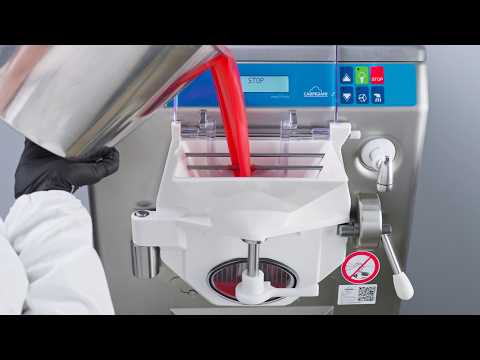
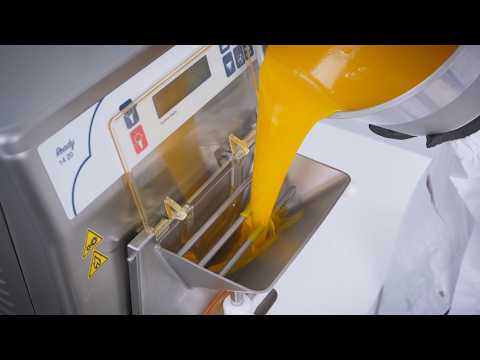
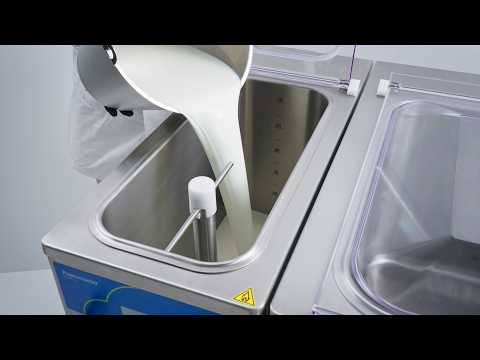
Watch Carpigiani ice cream machines in action
Tap a video to watch it on YouTube, or book a free demo at our showroom to see the machines for yourself.
Related guides
Ice cream machines: how to choose the right one
Soft serve machines, batch freezers and combined machines.
Gelato machines and ingredients for a new gelateria
Batch freezers, cabinets, bases and pastes.
Commercial soft serve machines for cafés and restaurants
Choosing a machine, the mix, cones and toppings.
Frequently asked questions
Which machine do I need for gelato versus ice cream?
Both authentic gelato and premium ice cream are typically made in a batch freezer, with gelato run at a lower overrun for that signature dense texture; dedicated gelato machines and pasteurisers add base control. Tell us your recipe and output and we will match the equipment — request a quote today.
How long does a commercial machine take to make ice cream?
Soft serve dispenses on demand, while batch freezers run in timed freezing cycles that vary by model and batch size. For exact cycle times on a specific machine, speak to a Majors Group specialist on 1800 625 677 who can match output to your peak demand.
Do you deliver and install across Australia?
Yes. We deliver, install and commission commercial ice cream machines across every Australian state and territory, including regional areas. Contact us on 1800 625 677 or via our contact page to arrange delivery and installation for your site.
What happens if my machine breaks down?
This is where our backup promise matters: Majors Group stocks genuine spare parts and has qualified technicians across Australia, so you are never left stranded. For service or parts, call 1300 005 777 or visit our service page.
Which commercial ice cream machine is best for a café?
For cones, sundaes and frozen yoghurt served straight from the machine, a countertop soft serve machine such as the Carpigiani 191 is the usual choice. For scooped ice cream and gelato in a display cabinet you need a batch freezer. Cafés that want both often run a soft serve machine beside a small batch freezer. See the soft serve machines range, or call 1800 625 677 and we will size a line for your counter.