
Soft Serve Machines
Full range of Commercial Soft Serve Machines
Countertop, freestanding, automatic and twin-flavour soft serve machines for cafés, QSR, dessert bars and high-traffic sites, with service and genuine parts across Australia.
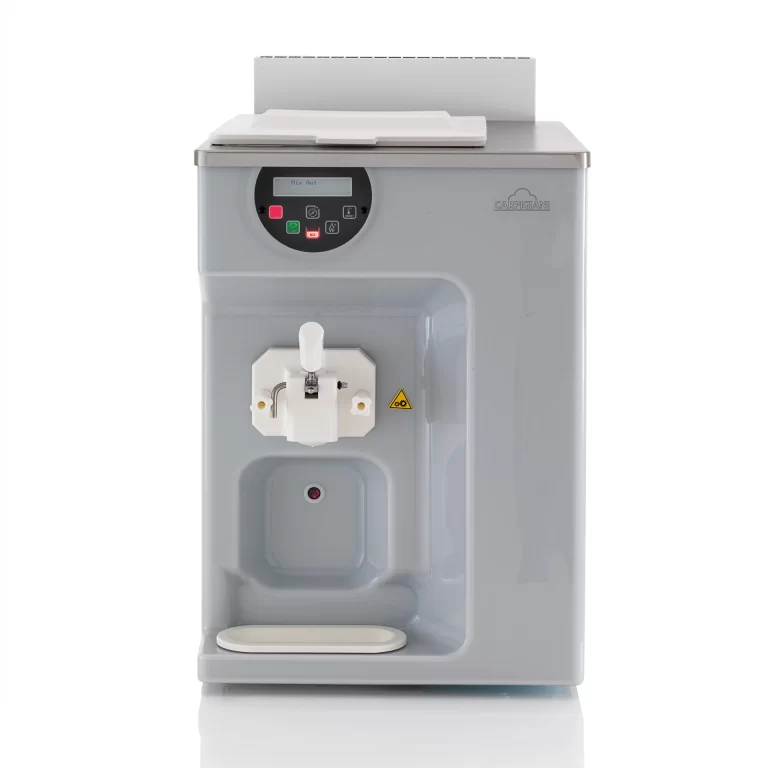
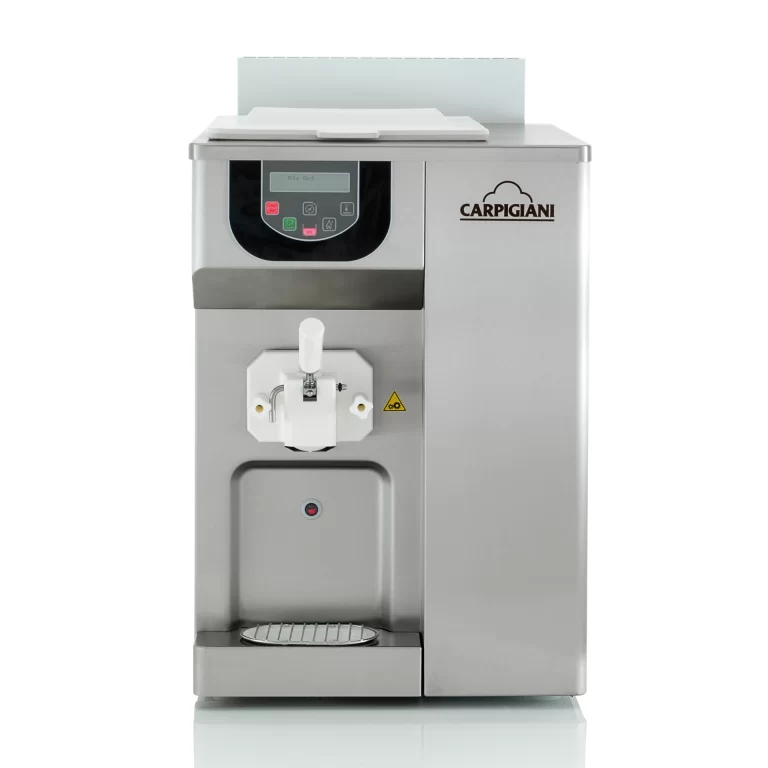
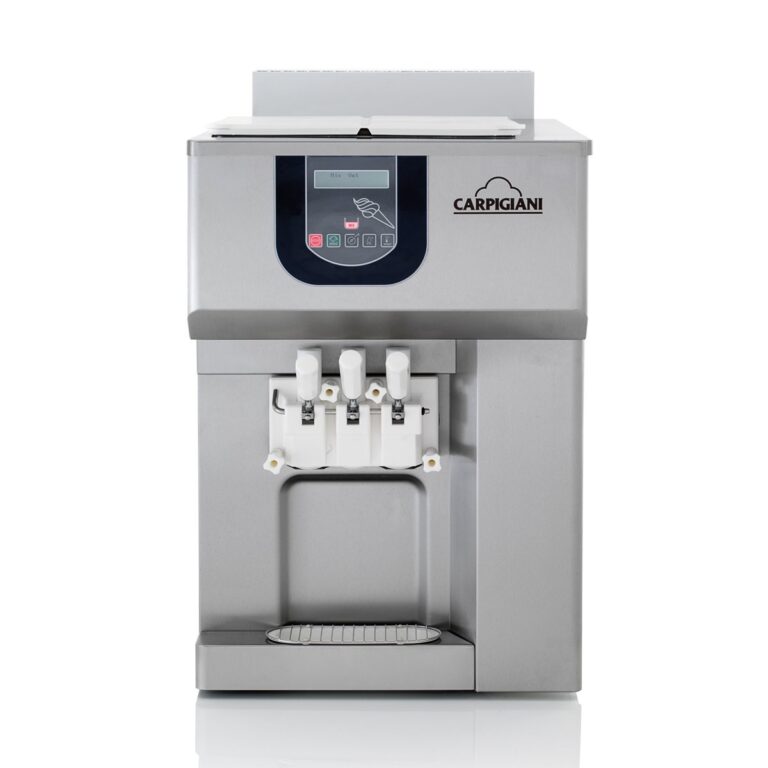
Carpigiani soft serve machines
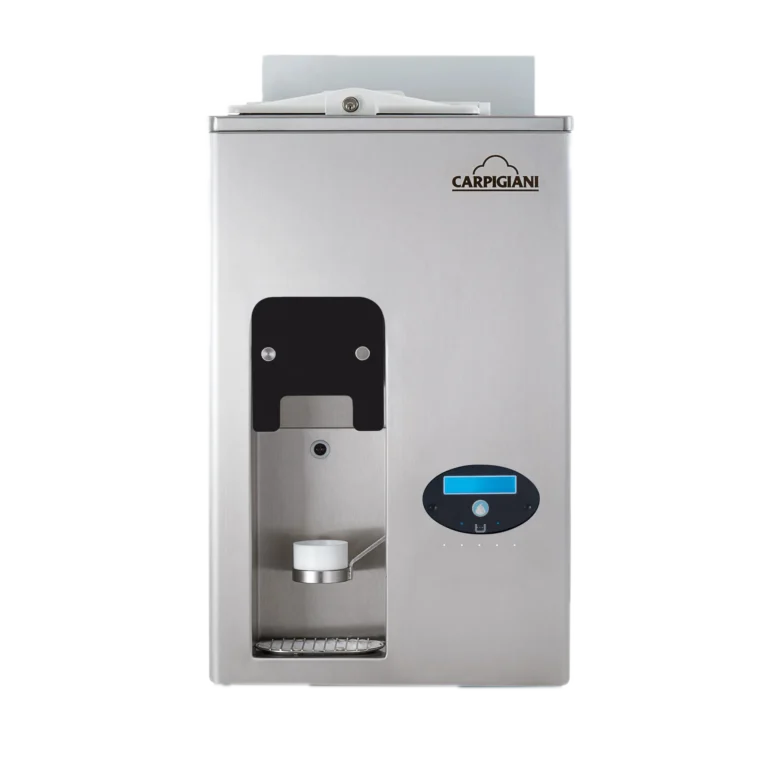
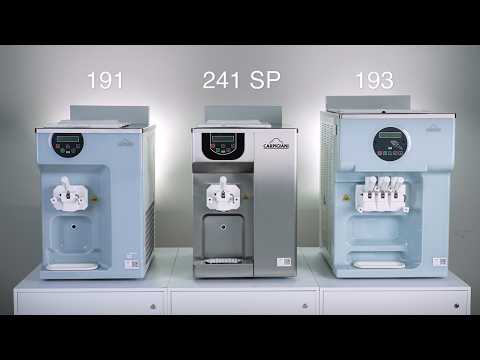
The 191, 193 and 241 family: countertop soft serve with Carpigiani’s Hard-O-Tronic consistency control.

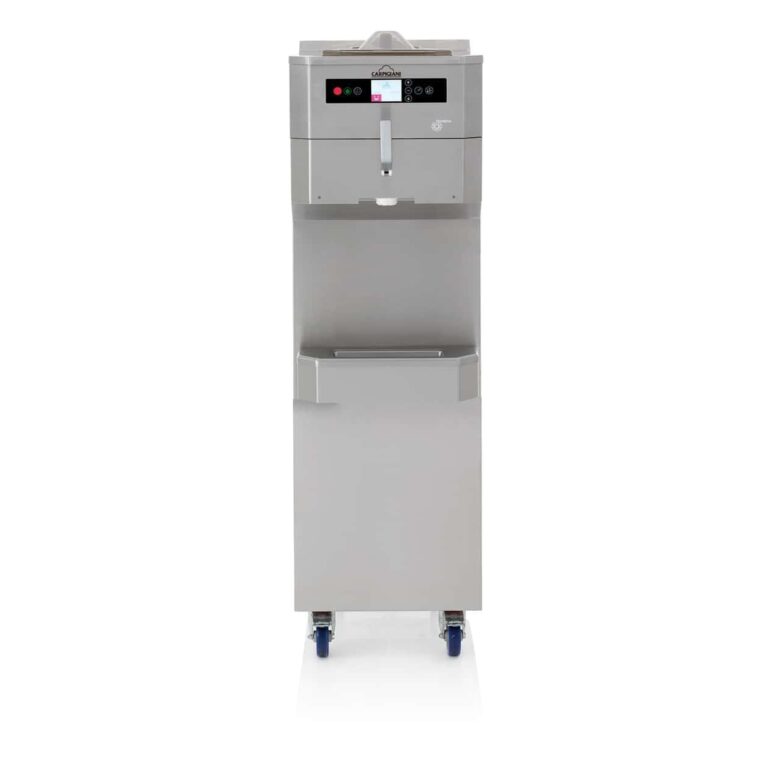
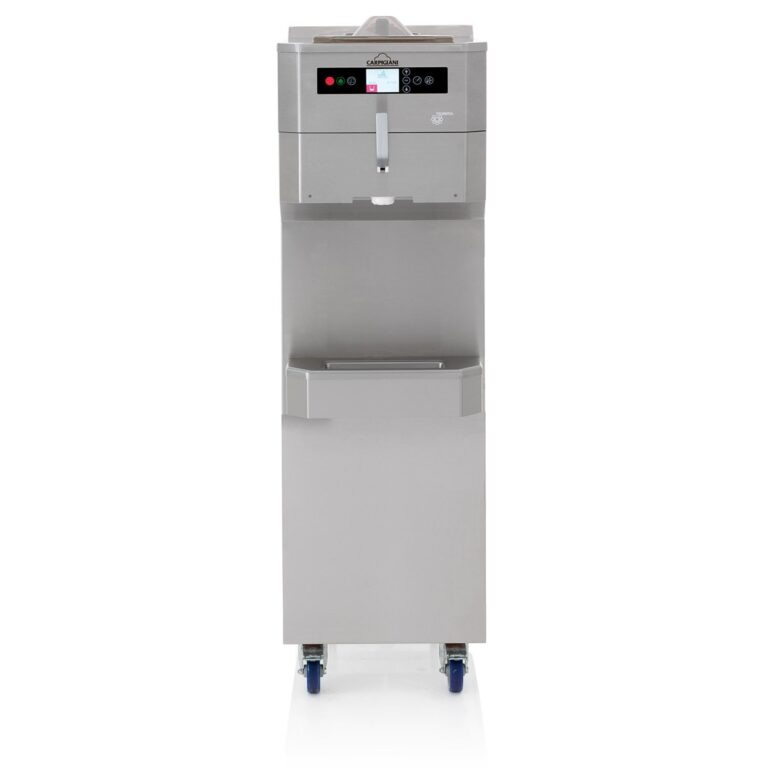
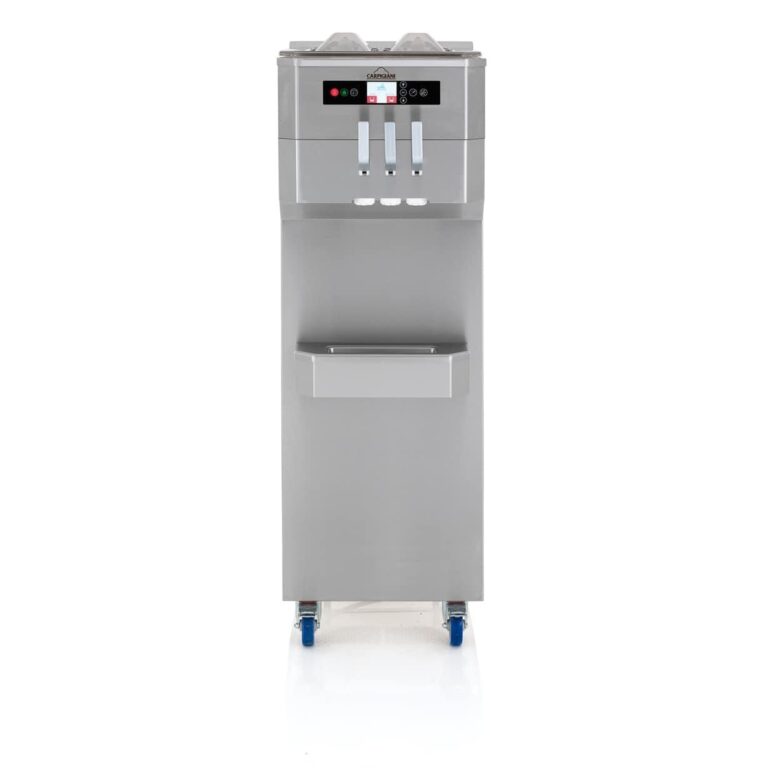
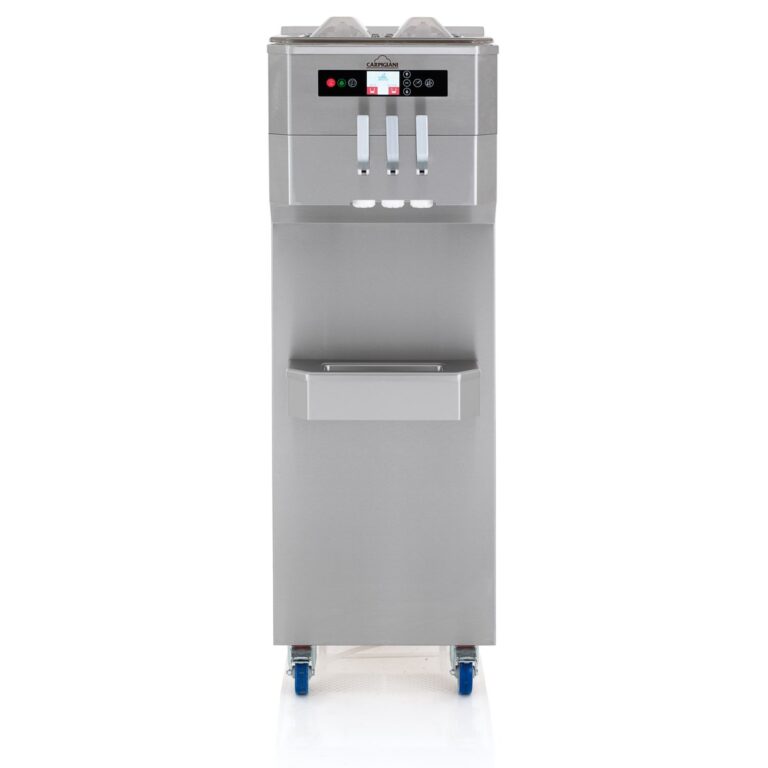
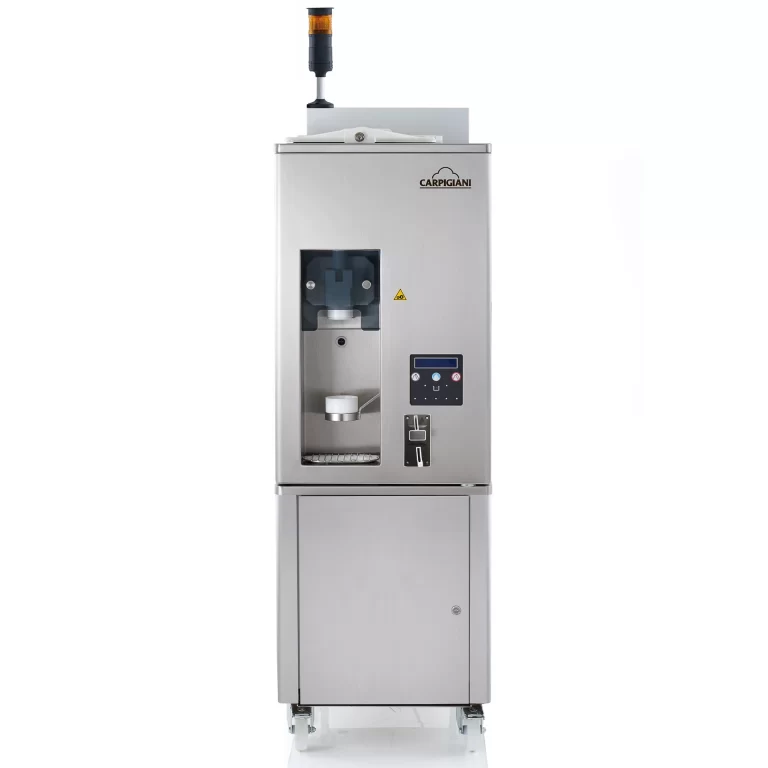
Free standing soft serve machines
Floor-standing pump and gravity machines for queues that never stop.
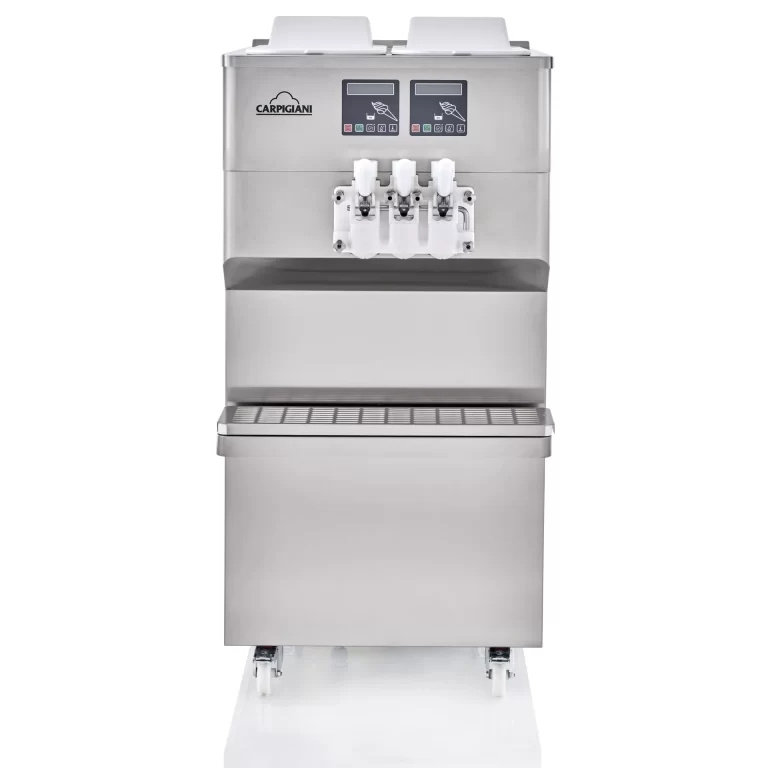
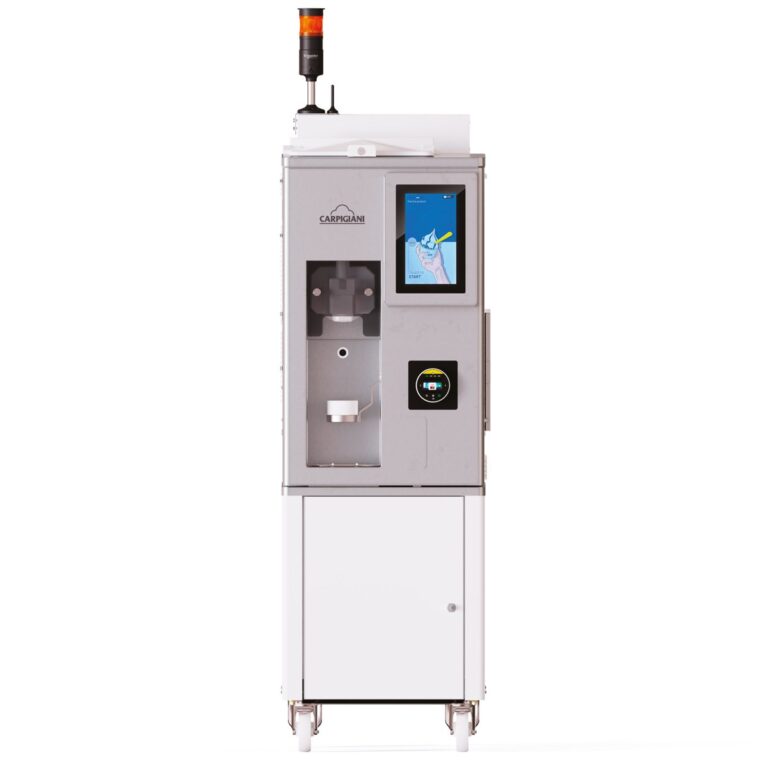
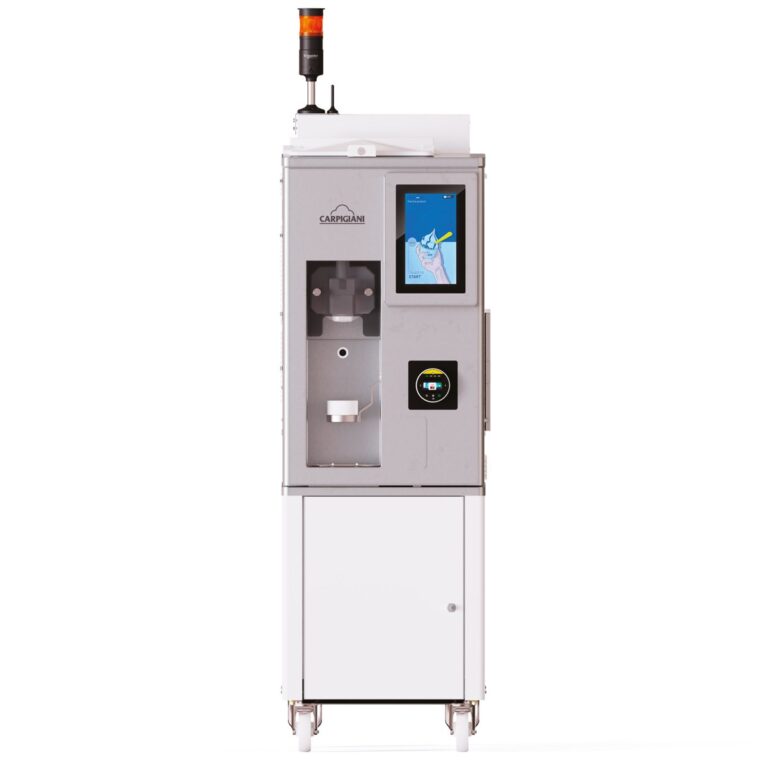
Automatic soft serve machines
Automatic, self-service machines for the busiest sites: the 241 Magica series, the 241 SA and the Automat.


Countertop soft serve machines
Gelmatic Giotto express gelato and soft serve.


Carpigiani soft serve machines compared
Every Carpigiani soft serve machine on this page in one table: output per hour, flavours, hopper, cylinder, power supply and rated power.
| Model | Type | Output per hour | Flavours | Hopper | Cylinder | Power supply | Rated power |
|---|---|---|---|---|---|---|---|
| 191 Classic | Countertop | 245 for the Pump model, 230 for the Gravity model (75 g servings) | 1 Flavour | 12 L for the Pump model, 18 L for the Gravity model | 1.75 L | 240 V / 50 Hz / 1 Ph | 2.4 kW |
| 191 Steel | Countertop | – | 1 Flavour | 12 L for Pump version; 18 L for Gravity version | 1.75 L | – | – |
| 193 Classic | Countertop | 435 with the Pump model; 415 with the Gravity model; Note production capacity depends on the mix used and the room temperature (75 g servings) | 2 Flavours + | 12+12 with the Pump model; 18+18 with the Gravity model | 1.75 L | 400 V / 50 Hz / 3 Ph | 4.7 kW with the Pump model; 4.5 kW with the Gravity model |
| 193 Steel | Countertop | 485 for the Pump model; 415 for the Gravity model (75 g servings) | 2 Flavours + | 12+12 L for Pump model; 18+18 L for Gravity model | 1.75 L | 400 V / 50 Hz / 3 Ph | 4.7 for Pump model; 4.5 for Gravity model kW |
| XVL 1 Classic | Floor-standing | 465 servings of 75 g | 1 Flavour | 13 L | 1.75 L | 400 V / 50 Hz / 3 Ph | 2.5 kW |
| XVL 1 Steel | Floor-standing | – | 1 Flavour | 13 L | 1.75 L | 400 V / 50 Hz / 3 Ph | 2.5 kW |
| XVL 3 Classic | Floor-standing | 630 servings of 75 g | 2 Flavours + | 13+13 L | 1.75 L | 400 V / 50 Hz / 3 Ph | 5.0 kW |
| XVL 3 Steel | Floor-standing | – | 2 Flavours + | 13+13 L | 1.75 L | 400 V / 50 Hz / 3 Ph | 5.0 for Pump version; 4.8 for Gravity version kW |
| UF 920 SP | Floor-standing | 533+533 (pump version); 466+466 (gravity version) (75 g servings) | 2 Flavours + | 20+20 L; Gravity-fed version: Individual hopper capacity: 19 quarts (18 L); Total hopper capacity: 38 quarts (36 L). Pump-fed version: Individual hopper capacity: 13 quarts (12 L); Total hopper capacity: 26 quarts (24 L) | 3.8 L | 400 V / 50 Hz / 3 Ph | 8.7 kW (pump version); 8.5 kW (gravity version) |
| 241 Magica P SP | Automatic floor-standing | 320 servings of 75 g | 1 Flavour | 12 L | 1.75 L | 400 V / 50 Hz / 3 Ph | 2.9 kW |
| 241 Magica Colore P SP | Automatic | 320 servings of 75 g | – | 12 L | 1.75 L | 400 V / 50 Hz / 3 Ph | 2.9 kW |
| 241 Magica E-PAY SP P | Automatic | 320 servings of 75 g | 1 Flavour | 12 L | 1.75 L | 400 V / 50 Hz / 3 Ph | 2.9 kW |
| 241 Magica E-PAY Colore SP P | Automatic | 320 servings of 75 g | – | 12 L | 1.75 L | 400 V / 50 Hz / 3 Ph | 2.9 kW |
| Automat | Automatic countertop | – | 1 Flavour | – | – | – | – |
| Gelmatic Giotto 11 | Countertop | Up to 18 kg/h | 1 Flavour | 6.5 L | 1.5 L | 240 V / 50 Hz / 1 Ph | – |
| Gelmatic Giotto 21 | Countertop | Up to 24 kg/h | 2 Flavours + | 2 × 6.5 L | 2 × 1.5 L | 240 V / 50 Hz / 1 Ph | – |
| Gelmatic Giotto 12 | Countertop | Up to 33 kg/h | 1 Flavour | 18 L | 3.2 L | 240 V / 50 Hz / 1 Ph | – |
Gelmatic soft serve machines
The Easy range: single flavour, twin flavour and floor-standing.


Gelmatic soft serve machines compared
The Gelmatic models on this page side by side.
| Model | Type | Output per hour | Flavours | Hopper | Cylinder | Net weight |
|---|---|---|---|---|---|---|
| Gelmatic BC Easy 1 GR | Countertop | Up to 22 kg/h | 1 Flavour | 11.5 L | 1.7 L | 109 kg |
| Gelmatic BC Easy 2 GR | Countertop | Up to 31 kg/h | 2 Flavours + | 2 × 11.5 L | 2 × 1.7 L | 176 kg |
| Gelmatic BV Easy 2 GR | – | Up to 42 kg/h | 2 Flavours + | 2 × 11.5 L | 2 × 1.7 L | 192 kg |
Who buys a commercial soft serve machine — and why
Soft serve is no longer just a summer add-on. Across Australia it has become a year-round profit centre because demand for indulgent, Instagrammable desserts keeps growing and the cost of goods per serve stays remarkably low. The buyers we work with typically fall into a handful of venue types, each with different priorities: Understanding which group you fall into is the single most useful starting point, because it dictates the machine type, output rating, number of flavours and footprint you should be shopping for. The sections below walk through each decision in order.
Cafes and dessert bars
want a compact countertop unit that adds a dessert line and an afternoon revenue stream without consuming bench space or needing a dedicated operator.
Gelaterias and ice cream shops
need premium texture, twin-flavour or twist capability, and often run a soft serve machine alongside a batch freezer for hard gelato.
QSR and franchise operators
prioritise speed of service, consistency across sites, high overrun for margin, and reliability under sustained peak demand.
Restaurants and pubs
want a “set and forget” dessert option that kitchen staff can plate quickly during service.
Froyo bars
need multiple flavours, self-serve formats, and machines that handle frozen yoghurt mixes and tangy cultures reliably. Our frozen yoghurt machines page covers these in detail.
Events, mobile vendors and ice cream vans
need robust, portable or van-mounted machines that perform in variable ambient conditions.
How to choose a commercial soft serve machine
There is no single “best” soft serve machine — only the best machine for your menu, your peak demand and your site. Work through these seven decisions and you’ll arrive at a tightly defined shortlist rather than a confusing catalogue.
Define your product and menu
Are you serving classic vanilla soft serve, frozen yoghurt, gelato-style soft serve, sorbet, or a mix? Will you offer a single flavour, two separate flavours, or a twist? Frozen yoghurt and some plant-based mixes behave differently to dairy soft serve, so the machine and its refrigeration need to be matched to the product. If you plan to expand the menu later, buy a machine that already has the capability rather than upgrading in twelve months. If frozen yoghurt leads your menu, start with the frozen yoghurt machines range. Our soft serve mixes run in any brand of machine, so you can choose the machine and the mix separately.
Estimate your peak output, not your average
The most common — and most expensive — mistake is sizing a machine to average daily sales. Soft serve demand is spiky: a school holiday afternoon, a post-match rush or a Friday-night dessert wave can be many times your daily average. A machine that can’t recover (re-freeze the cylinder) fast enough between serves will dispense soft, sloppy product or force customers to wait. Size for your busiest realistic hour. We cover how to do this in the capacity section below.
Choose the feed type: gravity or pump
This determines texture, overrun and maintenance. Gravity-fed machines are simpler and cheaper; pump-fed machines give higher overrun (more air, lighter texture, more serves per litre of mix). More on this in the machine types section.
Choose the cooling system: air-cooled or water-cooled
Air-cooled units are easier to install but need airflow and perform best in cooler rooms; water-cooled units hold output in hot kitchens but need a water supply. Australia’s climate makes this a genuine decision rather than a formality.
Match the footprint to your site
Countertop or freestanding? Front-of-house or back-of-house? Measure not just the machine but the clearances it needs for ventilation and servicing, and confirm the path to get it through doors and around corners.
Confirm your power and plumbing
Will the machine run on a standard 10-amp outlet or does it need a dedicated 15-amp circuit? Does it need a water feed or drain? Getting an electrician or plumber to confirm before delivery saves costly day-one surprises.
Weigh total cost of ownership, not just sticker price
A cheap machine that is hard to clean, unreliable in summer or unsupported for spare parts will cost far more over five years than a premium machine backed by local service. Factor in cleaning time, mix efficiency (overrun), energy use, warranty, and the availability of a service technician in your state. This is where Carpigiani and Majors Group’s nationwide support genuinely change the maths.
Soft serve machine types and how they differ
“Commercial soft serve machine” covers several distinct designs. Understanding the differences is what separates a confident buyer from one who over- or under-spends.
Countertop vs freestanding (floor) models
Countertop machines sit on a bench and are ideal for cafes, kiosks and venues that are tight on floor space or want the machine visible at the point of sale. They typically offer lower-to-mid output and are perfect for low-to-moderate volume. Carpigiani’s 191 and 193 countertop ranges are the workhorses here.
Freestanding (floor-standing) machines are larger, higher-capacity units that stand on the floor and are built for sustained high volume. They suit gelaterias, QSR and any venue expecting strong throughput. Carpigiani’s XVL range and self-service 241 Magica models live in this category.
Gravity-fed vs pump-fed
Gravity-fed machines rely on the weight of the mix in the hopper to feed the freezing cylinder. They have fewer moving parts, are simpler and cheaper to maintain, and produce a denser product with lower overrun. They’re a great fit for cafes and lower-volume venues that value simplicity.
Pump-fed (pressurised) machines actively inject air into the mix, producing higher overrun — a lighter, creamier serve and more cones per litre of mix, which improves margin at volume. They have more components to clean and maintain, but for high-throughput operations the extra yield and consistency justify it.
Air-cooled vs water-cooled
Air-cooled machines dissipate heat through a condenser fan and need clear airflow (typically generous clearance around the unit). They’re simpler to install — just power — but they work hardest in hot rooms, so recovery and output can drop in a warm Australian kitchen or during a heatwave.
Water-cooled machines reject heat into a water line. They hold their output and run quietly even in hot environments and need no side clearance for airflow, but they require a water connection (and in some cases a drain) and have higher installation cost. In hot climates or enclosed back-of-house spaces, water-cooled is often the smarter long-term choice.
Single flavour, two flavour and twist
A single-flavour machine has one hopper and one cylinder. A two-flavour machine offers two separate flavours, and a twist machine combines both into a spiral — three menu options (flavour A, flavour B, A+B twist) from one unit. Twist capability is a low-cost way to widen your menu and lift average spend.
Combination and multifunction machines
Some operators want one machine that does more. Carpigiani also offers combined and multifunction units (and a full gelato range including batch freezers, pasteurisers and combined machines) for venues that want soft serve, shakes and gelato from an integrated footprint. If your menu spans categories, talk to us about a combined solution before buying separate machines.
Sizing output and capacity to your venue
Output on commercial soft serve machines is usually quoted in kilograms per hour (kg/h) or, more usefully for planning, in serves per hour. As a rough guide, most commercial machines deliver somewhere between 150 and 300+ serves per hour depending on cylinder size, feed type, mix and ambient temperature. Carpigiani’s Gelmatic-range models, for example, are rated from around 18 kg/h on compact countertop units up to 26 kg/h and beyond on higher-capacity models.
Here’s how to translate that into a buying decision by venue type:
A practical rule: estimate your busiest hour in serves, then choose a machine rated comfortably above it so the unit spends that hour cruising, not maxing out. A machine running at 70% of capacity during peak holds texture and lasts longer than one running flat out. If you’re unsure, our team will model your peak demand with you and recommend a size — it’s free and it prevents the most expensive mistake in the category.
Cafe / kiosk (low-moderate volume)
a countertop gravity-fed single or twin unit such as the Carpigiani 191 or 193 is usually ample. Prioritise footprint and ease of cleaning over raw capacity.
Gelateria / dessert bar (moderate-high volume)
step up to a higher-output countertop or an entry freestanding model, often with twist capability. Recovery speed matters as much as headline output.
QSR / franchise (high, sustained volume)
a freestanding pump-fed unit (e.g. Carpigiani XVL range) gives high overrun, fast recovery and the durability to run all day. Consider water-cooled for hot kitchens.
Froyo bar (multi-flavour, self-serve)
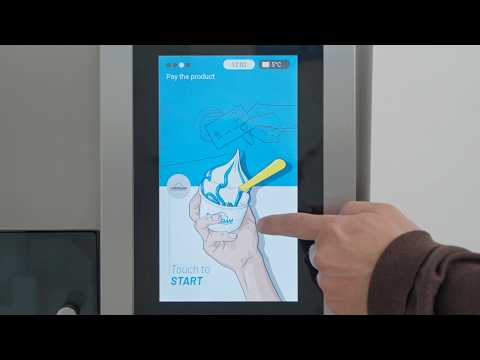
self-service models such as the 241 Magica range are designed for customer-operated, multi-flavour formats.
Events / mobile / vans
prioritise robustness, compact footprint and performance in variable ambient conditions over maximum throughput.
| Machine type / range | Best for | Indicative output | Footprint | Price guide |
|---|---|---|---|---|
| Carpigiani 191 (Classic / Steel) — countertop | Cafes, kiosks, low-moderate volume | Entry-level, gravity-fed soft serve | Countertop | POA |
| Carpigiani 193 (Classic / Steel) — countertop | Cafes, dessert bars wanting twin/twist | Moderate volume | Countertop | POA |
| Carpigiani XVL 1 / XVL 3 — freestanding | Gelaterias, QSR, high sustained volume | High output, pump-fed, fast recovery | Floor-standing | POA |
| Carpigiani 241 Magica / Magica Colore — self-service | Froyo bars, self-serve, multi-flavour | High volume, customer-operated | Floor-standing | POA |
| Gelmatic Giotto 11 / 12 / 21 — countertop | Compact venues, gelato-style soft serve | ~18–24 kg/h | Countertop | POA |
| Gelmatic BC / BV Easy (1–2 GR) | Moderate-high volume soft serve / froyo | ~22–26 kg/h | Floor / counter | POA |
| Combined / multifunction (Carpigiani gelato range) | Venues wanting soft serve + gelato + shakes | Varies by configuration | Floor-standing | POA |
Every commercial soft serve machine is priced to its configuration — flavours, feed type, cooling system and capacity all affect the figure — so models are listed as POA. That’s an opportunity, not an obstacle: it means you get a machine and a price built around your venue rather than a one-size-fits-all package. Tell us your venue type, your busiest hour and your menu, and we’ll recommend the right Carpigiani model, quote it, and walk you through finance, installation and support. Request a quote or call our sales team today and turn soft serve into one of your most profitable lines.
Power, plumbing and footprint considerations
Many soft serve purchases stall on day one because the site wasn’t ready for the machine. Confirm these four things before delivery.
Power
Smaller countertop machines often run on a standard 10-amp single-phase outlet, while larger or higher-output machines may require a dedicated 15-amp single-phase circuit (commonly around 230–240V, 50Hz). Some high-capacity floor models draw more and benefit from their own circuit so they don’t share load with other kitchen equipment. Always have the exact electrical spec for your chosen model checked by a licensed electrician — sharing a circuit with other appliances is a common cause of nuisance trips during peak service.
Plumbing
Air-cooled machines need power only. Water-cooled machines need a water supply connection and, in some installations, a drain. If you’re leaning water-cooled for Australia’s climate, confirm you have a tap and drainage point within reach of the machine’s final position.
Footprint and clearances
Measure the machine’s dimensions and add the manufacturer’s required clearances — air-cooled units in particular need space around the condenser for airflow, and all machines need access for routine cleaning and servicing. Don’t forget the delivery path: doorways, lifts, corners and thresholds. A machine that fits the corner may not fit through the door to reach it.
Ventilation and ambient temperature
Soft serve machines work hardest in hot rooms. Position air-cooled units away from ovens, grills and direct sun, keep the room ventilated, and remember that output figures are typically quoted at a moderate ambient temperature — performance will dip in an un-air-conditioned space on a 40-degree day. This is precisely why many Australian high-volume operators choose water-cooled.
Cleaning, hygiene and overrun
Soft serve machines are food-contact equipment and must be cleaned and sanitised on a regular schedule (mix-dependent, but commonly every couple of weeks for the full strip-down, with daily routines in between). Machines that are easy to dismantle save real labour cost over a year. Overrun — the amount of air whipped into the mix — directly affects both texture and yield: higher overrun means lighter product and more serves per litre, which is why pump-fed machines improve margin at volume. We’ll help you set up a cleaning and overrun regime that meets food-safety standards and protects your margin.
Technology other brands don't offer
The brands we represent engineer their own control systems and refrigeration, giving you features, functionality and efficiency you won’t get from everyday equipment. Features vary by model, so ask us which machines include them.
Hard-O-Tronic®
Detects when gelato reaches the ideal texture and holds it there until the batch is extracted, so every batch is consistent.
Teorema remote diagnosis
Monitor the machine over the internet. Our technicians can see what the machine sees, for faster service and less downtime.
Crystal program
Semi-dense Crystal gelato for gelato cakes and take-away tubs, filled straight from the batch freezer with the Crystal dispensing door.
Self-pasteurisation
Soft serve machines that pasteurise their own mix, so full wash-downs can be spaced out to as long as 42 days.
Black-out protection
After a power or water outage the machine checks time and temperature, then resumes or re-pasteurises to keep the mix safe.
Scheduled start
Production, pasteurisation and storage programs run automatically, for example overnight, so you open ready to serve.
Direct expansion cylinders
Optimised refrigeration for quicker freeze-down, less product waste, higher quality and lower energy use.
Techfrost blast freezing
Gelato hardening from −10 °C to −18 °C in 15 minutes, and blast chilling from +90 °C to +3 °C in 90 minutes.
Why Carpigiani is the benchmark brand
Majors Group distributes Carpigiani in Australia because, quite simply, it is the brand serious operators trust. Founded in Italy, Carpigiani has spent decades engineering the machines that the world’s gelaterias, dessert chains and hospitality venues rely on. For an Australian commercial buyer, the brand advantage comes down to a few things that matter on the floor: Crucially, a premium machine is only as good as the support behind it in your country. That’s where Majors Group comes in.
Consistency and texture
Carpigiani’s freezing technology delivers a smooth, stable product serve after serve — critical for brand consistency across a busy day or a multi-site operation.
Build quality and longevity
these are machines built to run hard for years, which is exactly what total-cost-of-ownership maths rewards.
Range
from compact countertop 191 and 193 models, through the high-capacity freestanding XVL range, self-service 241 Magica units, and the Gelmatic and combined ranges — there is a Carpigiani configuration for virtually every venue type.
Energy efficiency
modern Carpigiani refrigeration is engineered to keep running costs down, which compounds over the life of the machine.
Ease of use and cleaning
user-friendly controls mean staff produce flawless product quickly, and accessible components make routine cleaning and servicing straightforward.
Finance, service and support
Commercial soft serve equipment is an investment, and most operators would rather keep working capital free for stock, staff and fit-out than tie it up in a single machine. Majors Group offers finance options so you can spread the cost over manageable repayments and start generating revenue from the machine immediately. Because soft serve is such a high-margin product, the machine frequently earns more than its repayment from day one — meaning it can effectively fund itself while you retain your cash. Talk to us about structuring a finance package that suits your business, and ask about the tax-time considerations that may apply to financed equipment for Australian businesses.
Finance partners
Finance is available through Majors Group Finance, SilverChef (instant pre-approval) and other leading providers. See finance options.
Upgrade or downgrade
Business needs change. We help you move to a larger machine as demand grows, or a smaller one if your operation changes — whatever brand you run now.
Service and spare parts
The reason to buy a Carpigiani through Majors Group rather than chase a grey-import or unsupported brand is simple: when a machine goes down mid-service, you need parts and a technician fast. We provide:
This local backing is the difference between a machine that’s a liability and one that’s a dependable profit centre. It’s also why franchise and multi-site operators standardise on Carpigiani supplied through Majors.
What our support covers
Sales across Australia we deliver and support machines right across the country, not just the capital cities.
Professional installation so the machine is set up, commissioned and producing correctly from day one.
Operator training your staff learn correct operation, cleaning and basic troubleshooting, protecting both product quality and the warranty.
Genuine spare parts we hold and supply genuine Carpigiani parts, so repairs are correct and fast rather than improvised.
Factory-backed service and maintenance our technicians keep your machine running and your warranty intact, with maintenance programs available to prevent breakdowns before they happen.
Soft serve, gelato or frozen yoghurt — and what's next
If your menu ambitions go beyond soft serve, the same Carpigiani relationship covers the wider frozen-dessert category. Many operators pair a soft serve machine with a batch freezer for hard gelato, add a pasteuriser for house-made mix, or step into combined gelato machines as they grow. Browse the full Carpigiani range or our broader soft serve machines collection to see specific models.
Looking for a different machine?
Commercial ice cream machines
Batch freezers, combined machines and pasteurisers for scooped ice cream and gelato.
Frozen yoghurt machines
Countertop, floor-standing and self-serve machines, plus mixes, toppings and cups.
Gelato machines
The Carpigiani artisan gelato range, from entry models to production lines.
Related guides
Commercial soft serve machines for cafés and restaurants
Choosing a machine, the mix, cones and toppings.
Ice cream machines: how to choose the right one
Soft serve machines, batch freezers and combined machines.
A frozen dessert menu for cafés, hotels and restaurants
Soft serve, express gelato, slush, shakes and açaí.
Soft serve machine questions
How much does a commercial soft serve machine cost in Australia?
Price depends on the configuration — countertop vs freestanding, single vs twin/twist flavour, gravity vs pump feed, and air- vs water-cooled all affect the figure. Because each machine is specified to the venue, models are quoted POA (price on application). Request a quote from Majors Group and we’ll price the right Carpigiani model for your menu and volume, and discuss finance to spread the cost.
What size soft serve machine do I need for my venue?
Size to your busiest realistic hour, not your daily average. A cafe or kiosk is usually well served by a countertop unit such as the Carpigiani 191 or 193; gelaterias and QSR typically need a higher-output freestanding model like the XVL range; froyo bars suit self-service multi-flavour units. Choose a machine rated comfortably above your peak so it cruises rather than maxes out. Our team will model your peak demand and recommend a size at no cost.
What's the difference between gravity-fed and pump-fed soft serve machines?
Gravity-fed machines use the weight of the mix to feed the cylinder — they have fewer parts, are simpler and cheaper to maintain, and produce a denser product. Pump-fed (pressurised) machines inject air for higher overrun, giving a lighter, creamier serve and more cones per litre of mix, which improves margin at high volume. Gravity suits cafes and lower volume; pump suits high-throughput QSR and gelaterias.
Should I choose an air-cooled or water-cooled machine?
Air-cooled machines need only power and clear airflow, but they work hardest in hot rooms and can lose output in a warm Australian kitchen or heatwave. Water-cooled machines hold their output and run quietly in hot or enclosed spaces and need no side clearance, but they require a water connection and cost more to install. For hot climates or high-volume back-of-house sites, water-cooled is often the better long-term choice.
What power and plumbing does a commercial soft serve machine need?
Smaller countertop machines often run on a standard 10-amp single-phase outlet, while larger or higher-output models may need a dedicated 15-amp circuit (around 230–240V, 50Hz). Air-cooled units need power only; water-cooled units need a water supply and sometimes a drain. Always have a licensed electrician confirm the exact electrical spec for your chosen model — sharing a circuit with other equipment is a common cause of trips during peak service.
Can I finance a soft serve machine through Majors Group?
Yes. Majors Group offers finance options so you can spread the cost over manageable repayments and start earning from the machine immediately. Because soft serve is a high-margin product, the machine often generates more than its repayment from day one, effectively funding itself while you keep your working capital. Ask our team to structure a finance package suited to your business.
Why choose Carpigiani over a cheaper brand?
Carpigiani is the global benchmark for soft serve and gelato equipment, prized for consistent texture, build quality, energy efficiency and ease of cleaning. Just as important is local support: Majors Group provides sales, professional installation, operator training, genuine spare parts across Australia and factory-backed service. A premium machine backed by fast local parts and technicians has a far lower total cost of ownership than a cheap, unsupported unit.
How often does a soft serve machine need cleaning?
Soft serve machines are food-contact equipment and must be cleaned and sanitised on a regular schedule. A full strip-down clean is commonly done around every couple of weeks (mix-dependent), with daily routines in between. Machines that dismantle easily — like Carpigiani’s — save significant labour over a year. Following the correct cleaning regime also protects product quality, food safety and your warranty; our training covers the full process.
Can one machine make soft serve, frozen yoghurt and gelato?
A soft serve machine makes soft serve and frozen yoghurt from the same cylinder, so one unit covers both. Gelato or ice cream for a display cabinet needs a batch freezer, and Carpigiani also offers combined machines that pasteurise, age and freeze in one body. If frozen yoghurt is the hero of your menu, start with our frozen yoghurt machines; for scooped product see our commercial ice cream machines. If your menu spans all three, talk to us before buying separate machines: a combined solution can save footprint and cost.
What is soft serve?
Soft serve is ice cream frozen and served straight from the machine’s cylinder, at a warmer temperature than scooped ice cream kept in a cabinet, which is why it is softer and smoother. The machine whips air into the mix as it freezes, which gives the light texture and more serves per litre of mix. It is made from a pasteurised dairy or plant-based soft serve mix, and frozen yoghurt and gelato-style mixes run in the same machines.
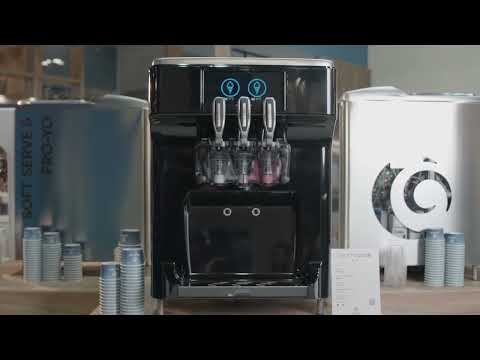
Watch Carpigiani and Gelmatic soft serve machines in action
Tap a video to watch it on YouTube, or book a free demo at our showroom to see the machines for yourself.
Catalogues
Carpigiani soft serve and shake machines
 New edition
Carpigiani
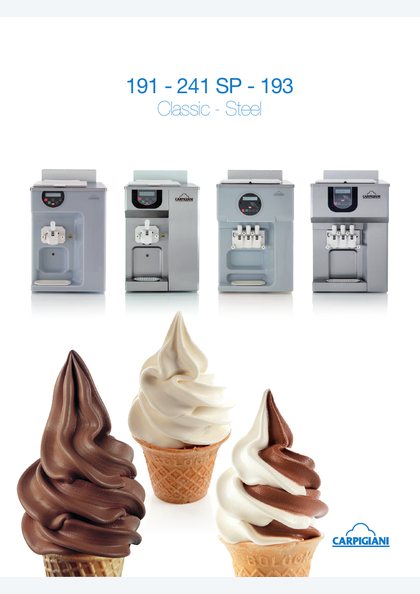
Carpigiani 191, 193 and 241
Countertop and floor soft serve machines for frozen yoghurt, express gelato and açaí.
PDF · 16 pages · 6.0 MB · Mar 2026
Email me the catalogue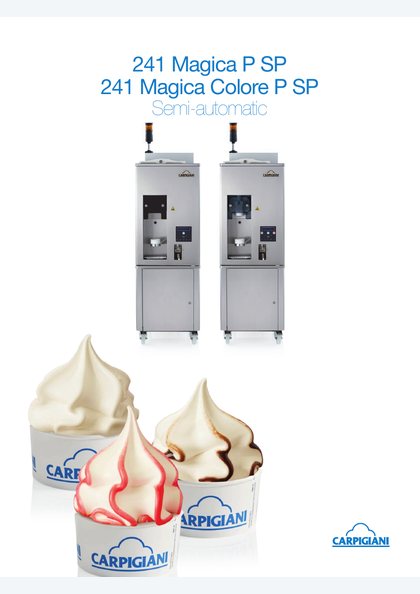 New edition
Carpigiani
Carpigiani soft serve range
Semi-automatic soft serve machines, including the Magica range.
PDF · 20 pages · 3.6 MB · Mar 2026
Email me the catalogue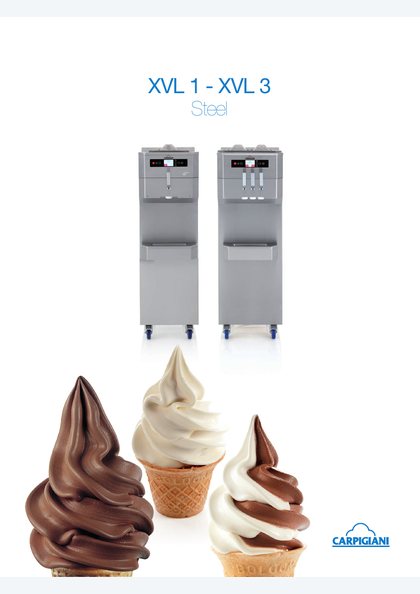 New edition
Carpigiani
Carpigiani XVL 1 and XVL 3
Floor-standing soft serve and frozen yoghurt machines.
PDF · 16 pages · 5.1 MB · Mar 2026
Email me the catalogueGelmatic soft serve machines
Gelmatic
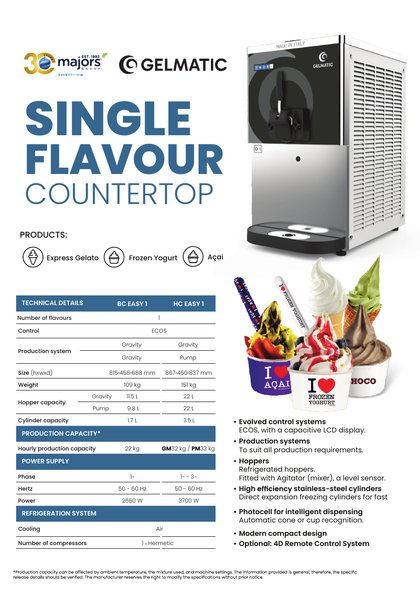
Gelmatic soft serve range
Giotto, BC, HC and BV Easy machines for express gelato, soft serve, frozen yoghurt and açaí.
PDF · 4 pages · 6.7 MB · 2025
Email me the catalogue